
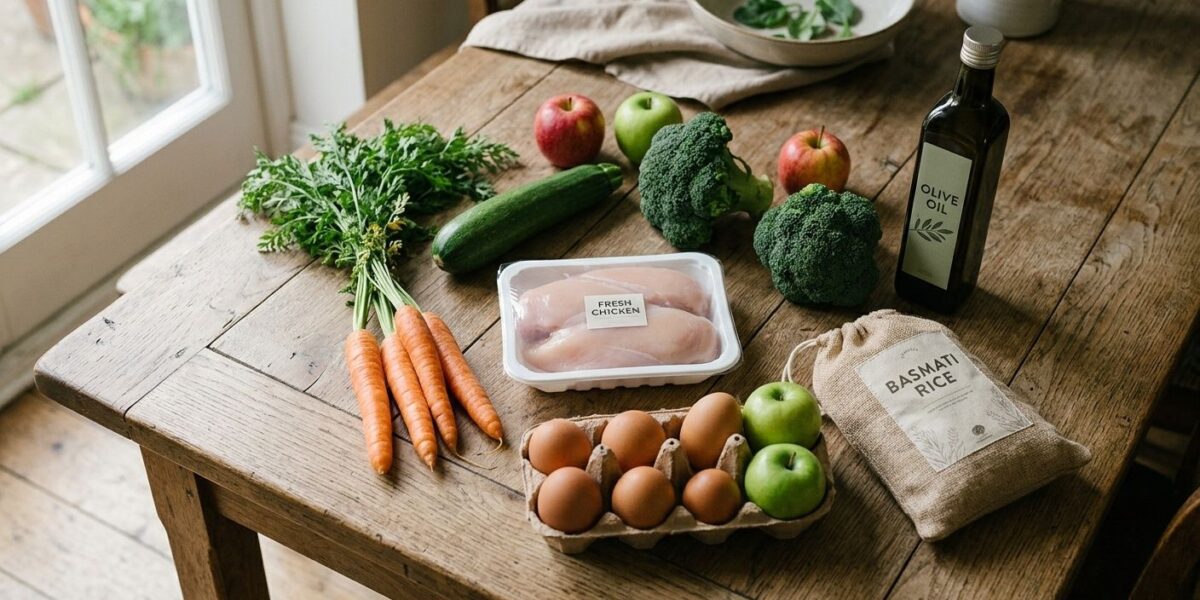
A low histamine grocery list is easier to follow when you shop by department, not by recipe. Freshness matters more than the food name, and the aisle you pick it from changes how long the item has been sitting. This guide gives you a plain, printable list organised by section of the store, shows how to shop at different kinds of shops, and explains what to check on labels so that hidden histamine does not slip into the trolley.
The list is a starting point for an elimination phase, not a lifelong rule. Histamine content varies with ripeness, storage and processing, and published lists disagree. A 2021 review in Nutrients describes a low histamine diet as a phased approach with a short elimination period, a testing phase for reintroducing foods, and then a longer maintenance diet. Shop for the first phase now, then widen the list as you learn what you tolerate. Our histamine intolerance food list has the full category tables.
The shopping rule that matters most: buy fresh, buy small, and get food into the fridge or freezer quickly. Histamine builds up as food ages, and cooking does not remove it.
Before You Shop, Plan Around Freshness
Most people with histamine intolerance find that storage time matters as much as the food itself. A fresh chicken breast cooked today is a very different food from the same chicken eaten as leftovers three days later. That changes how you plan a shopping trip.
- Shop more often, in smaller amounts for fresh meat and fish, or plan to freeze it the day you buy it.
- Pick perishables last and go straight home. The USDA’s food safety guidance on the basic steps for keeping food safe says perishable food should not sit out for more than 2 hours, or 1 hour when it is above 90°F (32°C). A warm car counts.
- Bring a cool bag for meat, fish and dairy, especially in summer or on a long trip home.
- Set the fridge to 40°F (4°C) or below and the freezer to 0°F (-18°C) or below, as the same USDA page advises.
- Plan the meals first. Know which two or three dinners you will cook this week, so you buy only what you will cook. Our low histamine meal prep system shows how to freeze portions the same day you cook.
The Low Histamine Grocery List by Department
Use these lists as a base for the elimination phase. Foods marked “test later” are not necessarily bad, but they are better left out at first and tried one at a time afterwards.
Produce
- Everyday vegetables: carrots, courgette (zucchini), cucumber, broccoli, cauliflower, cabbage, kale, lettuce, sweet potato, potato, pumpkin or squash, green beans, peas, asparagus, onion, leek and fresh garlic.
- Everyday fruit: apples, pears, blueberries, melon, mango (not overripe), peaches, cherries and grapes. A just-ripe banana is usually fine, an overripe one is better skipped.
- Fresh herbs: parsley, basil, coriander, thyme, rosemary, chives and ginger.
- Test later: avocado, mushrooms and dried fruit.
- Usually skipped at first: spinach, tomato, aubergine (eggplant), strawberries, citrus, pineapple, papaya and kiwi.
For detail, see our guides to low histamine vegetables and low histamine fruits.
Meat and Poultry
- Best choices: fresh chicken and turkey, and whole cuts of fresh beef or lamb.
- Test later: fresh pork, freshly minced meat and liver.
- Skip: bacon, ham, salami, chorizo, sausages and hot dogs, because they are cured, smoked or fermented.
- Buying tip: choose the freshest date, avoid meat that has been sitting in the counter for days, and freeze portions the day you buy. Mince has more surface area for bacteria, so cook it the day you buy it.
Cooking temperatures are in the USDA guidance linked above, which lists 165°F (74°C) for poultry and leftovers, 160°F for ground meat and 145°F for whole cuts of beef, pork and lamb with a rest. Our low histamine meat list goes into more detail.
Fish and Seafood
- Test later, during reintroduction: very fresh or frozen-at-sea white fish such as cod, haddock or hake, and fresh salmon (rated moderate on many lists). Very fresh or frozen-at-sea fish is the safer choice.
- Skip: tuna, mackerel, sardines, anchovies and herring, canned, smoked or dried fish, and shellfish.
Fish is the category where age matters most. See low histamine fish and how to buy, store and cook it.
Dairy and Eggs
- Best choices: fresh milk, butter, fresh cream, mozzarella, ricotta, cream cheese and well-cooked eggs.
- Test later: cottage cheese, halloumi and feta.
- Skip: hard and aged cheeses such as Parmesan, cheddar and blue cheese, and fermented products such as yoghurt, kefir, buttermilk and sour cream.
- Buying tip: pick the product with the latest date and finish it soon after opening.
Our guide to fresh dairy vs aged dairy explains the difference.
Grains, Bread and Pasta
- Best choices: white and brown rice, oats, quinoa, millet, buckwheat, plain pasta and corn products.
- Test later: yeasted bread.
- Skip: sourdough, because it is made by long bacterial fermentation.
See low histamine grains and how to cook them safely.
Oils, Sweeteners and Seasonings
- Best choices: olive oil, rapeseed (canola) oil, coconut oil, salt, black pepper, honey and maple syrup.
- Test later: chilli, paprika, cinnamon, cloves and spice blends.
- Skip: all vinegars, soy sauce, coconut aminos, ketchup, mustard, mayonnaise, yeast extract and stock cubes.
Our guide to low histamine sauces and condiments has swaps, and low histamine salad dressing recipes gives vinegar-free options.
Nuts, Seeds and Snacks
- Best choices: pumpkin seeds, chia, flaxseed, hemp seeds, macadamia nuts and plain rice cakes.
- Test later: almonds, sunflower seeds and sesame.
- Skip: walnuts, cashews, peanuts, chocolate and anything flavoured with yeast extract or vinegar.
Buy small packs and keep them cool, because stale nuts can carry mould. See nuts and mould contamination and low histamine snacks on the go.
Drinks
- Best choices: water, sparkling water, peppermint, chamomile and rooibos tea, and fresh milk or a plain plant milk you tolerate.
- Test later: coffee, black tea and green tea.
- Skip: alcohol, kombucha, kefir drinks and citrus juices.
Frozen Section
The freezer is your friend. Frozen vegetables, frozen blueberries and frozen peas are often fresher than their counter equivalents, because freezing halts most bacterial activity, so histamine stops building up while the food stays frozen. Check labels for sauces, seasonings and “glazes”. Plain is better than seasoned, and ready meals are a gamble because you do not know how long the ingredients were stored.
How to Read a Label for Hidden Histamine
Packaged food is where the list most often fails, because the ingredient you want to avoid is not always obvious. Our guide to hidden histamine in food covers where it comes from. When you read a label, look for:
- Vinegar, acetic acid and “cultured” ingredients, which appear in dressings, mayo, pickles, marinades and some breads.
- Yeast extract and hydrolysed vegetable protein, which are concentrated flavour boosters in stock, crisps and sauces.
- Soy sauce, miso and fermented soy.
- Tomato in any form, including paste, powder and ketchup.
- “Natural flavours” and “spices”. These are vague. If a product is not essential, choose one with a clearer list.
- Smoked, cured or aged ingredients.
- Preservatives you have reacted to before. Individual reactions vary, so use a histamine food diary to find your own pattern.
The shortest label is usually the safest. If you can name every ingredient, the product is probably easier to judge.
Where to Shop and What to Expect
Different kinds of shops suit different parts of the list. Stock and brands vary by country and region, so check labels rather than relying on any shop name.
| Type of shop | Good for | Watch out for |
|---|---|---|
| Large supermarket | Wide choice of fresh produce, fresh meat, plain grains and frozen vegetables | Long ingredient lists on packaged food. Fish counter freshness varies |
| Warehouse club | Bulk frozen vegetables, rice, oats and olive oil, which can lower the cost per portion | Large packs of fresh meat or produce that you cannot use or freeze in time |
| Discount grocer | Low prices on basics such as rice, oats, frozen vegetables and eggs | Shorter dates on some fresh items. Check labels carefully |
| Natural or health food shop | Seeds, plain grains, unflavoured seed proteins and dairy-free milks | Fermented products, kombucha and “gut health” foods are usually everywhere |
| Butcher or fishmonger | Very fresh whole cuts, and the chance to ask what day the stock arrived | Prices, and the need to cook or freeze the same day |
| Online delivery | Shelf-stable staples and frozen items, which saves trips | Substitutions you did not choose, and perishables left waiting after delivery |
For shelf-stable basics such as rice, oats, seeds and plain oils, online ordering can save time, particularly when you are shopping for a restricted diet. Perishables are better bought in person, where you can check the date and the condition of the item.
Our top pick
Plain oats, rice, seeds and oils are easy to order online. Check the label for added flavourings, and buy small packs of seeds and nuts.
Browse pantry staples on iHerb →A Sample One-Week Shopping List
Here is a simple example for one person during the elimination phase. Change it to suit your household, and adjust quantities to what you will cook or freeze.
- Produce: carrots, courgette, broccoli, cucumber, lettuce, sweet potatoes, potatoes, onions, garlic, apples, pears, blueberries and fresh parsley.
- Protein: fresh chicken breasts or thighs, a whole cut of beef or lamb, and eggs.
- Dairy: fresh milk, butter and mozzarella.
- Grains: rice, oats and plain pasta.
- Pantry: olive oil, salt, black pepper, honey or maple syrup, pumpkin seeds and plain rice cakes.
- Drinks: peppermint or chamomile tea bags, and sparkling water.
- Freezer: frozen peas, frozen broccoli and frozen blueberries.
Freeze portions of cooked chicken or beef the day you cook them, and thaw in the fridge. Our histamine intolerance meal plan shows how this list turns into seven days of meals.
Keeping the Cost Down
A restricted diet does not have to be expensive, because the basics of a low histamine plan are cheap staples. A few habits help.
- Build meals around rice, potatoes, oats and seasonal vegetables. They are cheap, filling and reliably low.
- Use the freezer for protein. Buying fresh chicken in a larger pack and freezing portions on the same day cuts the cost per meal, as long as you freeze it promptly.
- Buy frozen vegetables and fruit. They keep for months, and nothing goes to waste.
- Skip specialist products at first. “Histamine friendly” labels can add a lot to the bill, and plain food does the same job during an elimination phase.
- Use a short list. A short list reduces impulse buys of snacks you may not tolerate.
What to Do When a Store Does Not Have What You Need
- No fish you trust: skip it and choose chicken for the night. Fish belongs to the testing phase anyway.
- Only aged cheese is on offer: choose fresh mozzarella or ricotta, or skip cheese that week.
- Only vinegar-based dressings: use olive oil and salt, or make your own with the recipes linked above.
- Only flavoured snacks: plain rice cakes, a piece of fruit you tolerate, or a few pumpkin seeds from the bulk bin if they are fresh.
- A ready meal is the only choice: read the label for vinegar, yeast extract, tomato and soy, and when in doubt leave it.
If you eat out often, our low histamine restaurant card helps you explain your needs, and the guide to high histamine foods to avoid is a good companion to this list.
Common Shopping Mistakes
- Buying in bulk and letting it age. A big pack of meat that you do not freeze for three days is not a bargain.
- Leaving groceries in a warm car. Chill perishables within the time limits above.
- Trusting “fresh” on the label. Look at the date and the condition, not the marketing.
- Skipping the label because the food seems plain. Even plain-looking soups, sausages and breads can contain vinegar or yeast extract.
- Treating the list as permanent. The point is to find your threshold and widen your diet. See how long to stay on a low histamine diet.
Adjusting the List for Different Households
One list rarely fits everyone at the table. A few adjustments keep it workable without turning shopping into a second job.
- Shopping for children. Check with a paediatrician or dietitian before restricting a child’s diet, because growing children have higher needs and fewer reserves. Our guide to histamine intolerance in children covers the basics.
- Vegetarian households. Protein is the hard part, because the usual low histamine proteins are animal foods. Eggs, fresh dairy such as milk and mozzarella, and seeds such as pumpkin and hemp are the usual starting points. Soy products are generally avoided at first, and legumes and plain tofu are best tested one at a time. Our low histamine vegetarian recipes show how to build meals around them.
- Mixed households. Cook the base meal plain, and let other people add sauces, cheese or tomato at the table. It is easier than cooking two dinners.
- Holidays and events. Plan ahead for the meals you cannot control. Our low histamine Thanksgiving menu shows how to adapt a big family meal.
- Seasonal changes. Fruit and vegetable choices shift with the season, and seasonal produce is usually cheaper and fresher. Keep the same rules, and swap in what is in season.
Whatever your household looks like, keep a short list of five or six meals that you know work, and rotate through them. It makes shopping faster and helps you spot a reaction when something new enters the mix.
When to See a Doctor
Histamine intolerance symptoms overlap with food allergy, coeliac disease, inflammatory bowel disease, mast cell disorders and other conditions. See a doctor before starting a restrictive diet, especially if you are losing weight without trying, if symptoms are getting worse, if you are pregnant, or if you are planning a diet for a child. A registered dietitian can help you avoid nutritional gaps.
Call emergency services straight away if you or someone else has signs of anaphylaxis after eating. These include swelling of the lips, tongue or throat, difficulty breathing or wheezing, a hoarse voice, feeling faint or dizzy, or collapse. Use an adrenaline auto-injector if one has been prescribed, and remember that adrenaline (epinephrine) is the first treatment and antihistamines are not a substitute.
Do not stop or change any prescribed medication because of a food list. Some medicines affect DAO activity, and the right person to discuss that with is your doctor or pharmacist.
Questions People Ask About Shopping for a Low Histamine Diet
What should be on a low histamine grocery list?
Fresh meat and poultry, fresh dairy such as milk and mozzarella, eggs, plain grains like rice and oats, most fresh vegetables and fruits such as apples, pears and blueberries, olive oil, and fresh herbs. Skip cured meats, aged cheese, vinegar, soy sauce, tomato products and alcohol at first.
Is frozen food okay on a low histamine diet?
Yes, often it is the safer choice, because freezing stops histamine from building up. Frozen vegetables and frozen berries are common staples. Check labels on sauces and seasoned products.
Can I eat leftovers if I buy fresh and cook in batches?
Fresh food is safer, because histamine keeps forming as food sits. If you cook in batches, cool the food quickly, freeze it in portions on the same day, and reheat until it is piping hot throughout. The USDA gives 165°F (74°C) for leftovers.
Which supermarket is best for a low histamine diet?
No shop is best for everyone, because stock and labels vary by country and by branch. Look for places with fresh turnover, a good frozen section and plain staples, and check every label rather than trusting a brand.
How do I shop for a low histamine diet on a budget?
Build meals around rice, potatoes, oats and frozen vegetables, freeze fresh protein in portions on the day you buy it, and avoid specialist “histamine friendly” products at first.
How long should I follow this grocery list?
A 2021 review describes an elimination phase of about 10 to 14 days, a test phase of up to 6 weeks, then maintenance. Ask your doctor or dietitian how long to stay on each phase, and reintroduce foods one at a time. The aim is the widest diet that keeps you comfortable. If your symptoms do not improve, talk to your doctor about other causes.
Medical disclaimer: This content is for informational purposes only and does not constitute medical advice. Always consult a qualified healthcare provider before starting any supplement regimen.
→ Try the Histamine Load Calculator — find out if your daily food choices are pushing you over your histamine threshold.
→ Track your reactions with the Histamine Food Diary — identify your personal trigger foods automatically.
→ Ready to start? Use the 4-Week Elimination Diet Planner — interactive daily tasks with progress tracking.
→ Build your meal with the Low Histamine Meal Builder — instant histamine scoring as you select ingredients.