
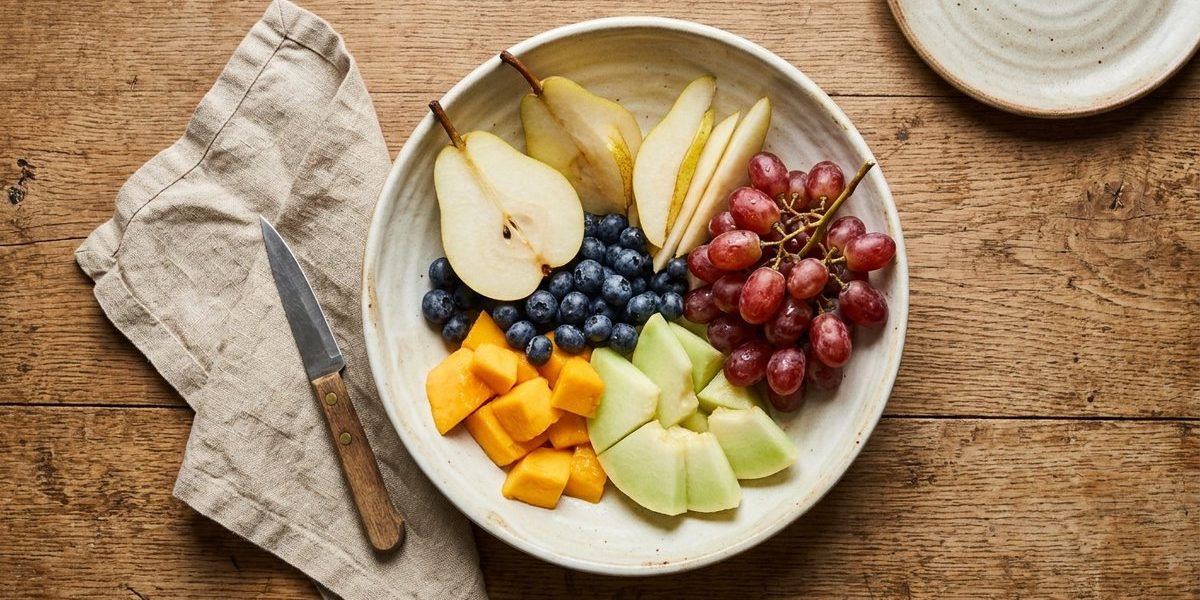
Fruit is supposed to be the easy part of eating well. Then you start a low-histamine diet, look up a few lists, and find that the same banana is “safe” on one website, “avoid” on another and “only if ripe” on a third. This guide sorts out low histamine fruits in a way that you can actually shop with: which fruits our house food list rates as low, which ones sit in the middle and are worth testing later, which ones are labelled histamine liberators, and why the lists you find online so often contradict each other.
The short answer is reassuring. Most everyday fruit is low in histamine itself, and plenty of it fits comfortably into an elimination phase. The longer answer is about the handful of fruits that get flagged for reasons other than histamine content, and about how ripeness, storage and processing change the picture. Both matter if you want variety on your plate without guessing.
Quick reference. Low on our list: apples, pears, blueberries, blackberries, melon, watermelon, mango, peaches, apricots, nectarines, cherries, grapes and ripe banana. Moderate (test later): overripe banana, dried fruit and avocado. Commonly listed liberators: citrus (orange, lemon, lime, grapefruit), strawberries, raspberries, pineapple, papaya and kiwi. Tomato, which is botanically a fruit, is rated High and is also listed as a liberator.
Why a Fruit Ends Up on an Avoid List
When a fruit appears on a “foods to avoid” list, it is there for one of three quite different reasons, and most lists never tell you which one applies. Separating them makes the whole topic far less confusing.
The first reason is histamine content. Some foods simply contain a lot of histamine, usually because bacteria have had time to convert the amino acid histidine into histamine. That is why aged cheese, cured meat, wine and fermented vegetables score so badly. Fresh fruit is rarely in this group. It has not been fermented, aged or stored for months, so its histamine content is generally low.
The second reason is the “liberator” idea. A histamine liberator is a food that is thought to prompt the body’s own mast cells to release histamine, even if the food itself contains very little. Citrus, strawberries, raspberries, pineapple, papaya and kiwi are the fruits most often given this label. As we will see below, there is no human clinical evidence for this effect, but the label is widespread and some people report reactions to these fruits, so we keep them flagged.
The third reason is other amines. Histamine is not the only biogenic amine in food. Putrescine and cadaverine, for example, are broken down by the same diamine oxidase (DAO) enzyme in the gut that handles dietary histamine. A 2020 review in Biomolecules, Histamine Intolerance: The Current State of the Art, suggests that symptoms some people notice after citrus fruits or bananas may be due to other amines, especially putrescine, competing for that enzyme. The authors present this as a possibility rather than a proven mechanism, which is the honest way to describe it.
So a fruit can be low in histamine and still end up on an avoid list. Knowing that turns a vague warning into a specific question you can test for yourself.
What the Research Says About Fruit Lists
If you have ever compared two low-histamine diet sheets and found that they disagree, you are not imagining it. A 2021 review in Nutrients, Low-Histamine Diets: Is the Exclusion of Foods Justified by Their Histamine Content?, looked at ten published low-histamine diets side by side. The researchers found little consensus about which foods to exclude. Fermented foods were the only group that every diet excluded, and most individual foods were excluded by half of the diets or fewer.
Fruit was one of the clearest examples. The review notes that histamine was not detected in citrus fruits, yet 60% of the diets it examined still advised excluding them. Bananas were also frequently excluded. The authors calculated that only about a third of the excluded foods across all the diets could be explained by a high histamine content. For the rest, the review points to the liberator idea and other amines, both of which have little supporting evidence, and notes that many recommendations were carried over from earlier studies.
On the liberator question specifically, the same review is direct: there are no clinical studies in humans supporting the widely held belief that these foods release histamine in the body, and the idea rests on a small number of inconclusive laboratory and animal studies. That does not mean people who react to strawberries or oranges are wrong about their own symptoms. It means the reason behind the reaction is not settled, and it may differ from person to person.
What does this mean in practice? It means you can relax about most fruit, treat the liberator group as “test carefully” rather than “forbidden forever”, and judge fruits outside the common lists by how you react rather than by whichever website you happened to read first.
The Low Histamine Fruits You Can Lean On
These are the fruits our food list rates as low. They are the ones to build around during an elimination phase, because they give you sweetness, fibre and variety without the open questions attached to the liberator group.
Apples and pears. Cheap, available all year and easy to carry. Eat them fresh rather than from a bowl that has been sitting out for a week, and cut away any bruised or soft patches.
Blueberries and blackberries. Unlike strawberries and raspberries, these two berries are not usually listed as liberators. Fresh or frozen both work. Check frozen packs for added fruits or other ingredients.
Melon and watermelon. Very hydrating and gentle. Once a melon is cut, wrap it, refrigerate it and eat it within a short time rather than leaving wedges on the counter.
Mango. Rich and sweet enough to stand in for dessert. Ripe but firm mango is easier to handle than very soft fruit that is starting to turn.
Peaches, apricots and nectarines. Stone fruits are summer staples. Fresh apricots are rated low; dried apricots are a different story and are covered further down.
Cherries and grapes. Good grab-and-go options. Wash them just before eating rather than storing them wet, which encourages mould.
Ripe banana. A ripe, yellow banana is rated low on our list. A heavily speckled or brown banana is rated moderate, which is why the advice you read online seems to change from one source to the next. Ripeness is the deciding detail.
| Fruit | House rating | Main reason | Practical note |
|---|---|---|---|
| Apples, pears | Low | Low histamine, not a listed liberator | Eat fresh, trim bruises |
| Blueberries, blackberries | Low | Not usually listed as liberators | Fresh or plain frozen |
| Melon, watermelon | Low | Low histamine | Refrigerate once cut |
| Mango | Low | Low histamine | Ripe but not overripe |
| Peaches, apricots, nectarines | Low | Low histamine | Fresh, not dried |
| Cherries, grapes | Low | Low histamine | Wash just before eating |
| Ripe banana | Low | Low histamine | Yellow, few spots |
| Overripe banana | Moderate (test) | Precaution as fruit ripens | Test during reintroduction |
| Dried fruit | Moderate (test) | Long storage, concentrated | Check for sulphites |
| Avocado | Moderate (test) | Listed as a liberator, histamine not detected | Test during reintroduction |
| Citrus (orange, lemon, lime, grapefruit) | Liberator | Liberator label, other amines | Includes juice and zest |
| Strawberries, raspberries | Liberator | Liberator label | Test late in reintroduction |
| Pineapple, papaya, kiwi | Liberator | Liberator label | Test late in reintroduction |
| Tomato | High / liberator | Contains histamine, liberator label | Includes paste and ketchup |
For every other food group, including vegetables, grains, dairy and drinks, the full ratings are in our histamine intolerance food list, which uses the same scale as the table above.
The Middle Group Worth Testing Later
Three fruit items sit in the moderate band on our list. They are not “bad”, but they are better left until you have a stable baseline and can tell whether a reaction is really linked to them.
Overripe banana. The moderate rating here is a precaution. As a banana ripens, its chemistry changes, and banana is one of the fruits the 2021 review found frequently excluded even though histamine was not detected in it. Other amines are one suggested explanation. If you love banana bread made from very ripe fruit, it is worth testing once you are into reintroduction rather than during elimination.
Dried fruit. Raisins, dried apricots, figs and dates go through drying and often long storage, which concentrates everything in the fruit. Some dried fruits, especially pale dried apricots, are treated with sulphites to help keep their colour. Sulphite sensitivity is a separate issue from histamine intolerance, but it can produce overlapping symptoms, so it is a confounder worth knowing about. Unsulphured versions are available, and a small portion is a better test than a handful.
Avocado. Avocado is botanically a fruit and often appears on liberator lists. In the 2021 Nutrients review by Sánchez-Pérez and colleagues, histamine was not detected in avocado samples, and the case against it is weaker than its reputation suggests. We go through the evidence in detail in our article on the avocado histamine liberator claim. For now it sits in the test group, not the avoid group.
Liberator Fruits and Why We Still Flag Them
Citrus (orange, lemon, lime and grapefruit), strawberries, raspberries, pineapple, papaya and kiwi are the fruits most often called histamine liberators. Given the lack of human studies, why keep them flagged at all?
There are two reasons. The first is that some people with histamine intolerance report reacting to them, and many published diets were built around foods patients linked to their symptoms, even when the mechanism is unclear. The second is that some of these fruits may matter for reasons other than histamine release. The Biomolecules review mentions putrescine in citrus as a possible factor. Whatever the cause, keeping them out during the elimination phase makes it easier to see a clear change, and bringing them back one at a time later tells you more than any list can.
Citrus deserves a special mention because it hides in so many places. Lemon juice in dressings, lime in marinades and orange zest in baking all count, and some flavourings may contain citrus. Added citric acid is usually not made from citrus fruit and there is no good evidence it affects histamine, though some people prefer to avoid it while testing. If you have cut out oranges but still react, check recipes and labels for hidden citrus before blaming the fruits you are eating on purpose. Our low histamine salad dressing recipes show how to get brightness into food without lemon or vinegar.
Tomato, the Fruit Nobody Thinks Of
Tomato is botanically a fruit, and it is the one fruit on our list rated High. It is different from the liberator group because it is reported to contain histamine itself, and it is also commonly listed as a liberator. Tomato paste, passata and ketchup are concentrated forms and sit in the same high band. The full story, including why cooking does not fix it, is in our guide to tomatoes as a histamine liberator.
Roasted red pepper is the usual stand-in when a recipe needs a red sauce, and beetroot can add colour to soups and dips.
Fruits Most Lists Never Rate
Plums, pomegranate, coconut, fresh figs, lychee, cranberries, persimmon and passion fruit are some of the fruits you will find rated inconsistently, or not at all, across histamine lists. Plum, for example, is named as a liberator in some reviews, yet histamine was not detected in plum in the 2021 Nutrients analysis. Our food list does not give these fruits a firm rating, and we would rather say that honestly than invent one.
For these fruits the practical answer is that tolerance varies by individual. Treat them the way you would treat any food you are reintroducing: one at a time, fresh, in a normal portion, on a day when you are otherwise well. If you react, note it and move on. If you do not, you have gained another option.
Ripeness, Storage and the Fruit Bowl Problem
With most fruit, the bigger risk is not the fruit you buy but what happens to it afterwards. A peach eaten the day it ripens is not the same as a peach that has been sitting soft in a warm kitchen for four days, and a melon cut and eaten straight away is not the same as wedges kept in the fridge for most of a week.
A few habits make a real difference:
- Buy smaller amounts more often rather than one large weekly shop of soft fruit.
- Keep ripe fruit in the fridge if you will not eat it within a day or so.
- Throw away fruit with visible mould. Do not just cut the mouldy part out of soft fruit such as berries or peaches.
- Cut fruit close to the time you eat it. If you prep it ahead, refrigerate it promptly in a sealed container.
- Freeze ripe fruit you will not get through in time. It is ideal for smoothies and baking.
Freezing slows further change but does not reverse it. Histamine and other amines that have already formed stay in the food after freezing or cooking, so freeze fruit while it is fresh, not after it has started to turn.
Juice, Smoothies and Dried Fruit
Processing changes fruit in ways that are easy to miss. Juice is the obvious example. Many shop-bought juices are blended with other fruits, including citrus, or are made from concentrate that has been stored for a long time. Freshly pressed apple or pear juice is a simpler option if you want juice, though whole fruit is usually the better choice because it keeps the fibre.
Smoothies are a good way to use low histamine fruits, especially frozen ones. Blend them fresh and drink them straight away rather than keeping a batch in the fridge for days. Mango, blueberries, ripe banana and pear work well together, and our low histamine smoothie recipes give combinations with fresh milk bases instead of yoghurt or kefir, which are fermented and rated high.
Dried fruit, as covered above, sits in the moderate band. If you use it, buy small packs, check for sulphites and store them sealed after opening.
Frozen and Canned Fruit
Plain frozen fruit is one of the easiest ways to keep low histamine fruits on hand. It is often frozen soon after picking, it does not sit ripening in your kitchen, and you can use exactly what you need. Read the label, because some frozen mixes include strawberries or pineapple.
Canned fruit is more mixed. Fruit canned in its own juice or in light syrup can be fine, and once a can is opened the fruit should be refrigerated and eaten soon. Citric acid is a common additive; some people prefer to avoid added citric acid while testing, so plain canned pears or peaches are the simplest store-cupboard option.
How to Test a Fruit During Reintroduction
Once your symptoms have settled on a low-histamine base, you can start testing foods from the moderate and liberator groups. With fruit, the process is simple, and it is about food choices, not supplements or medication.
- Pick one fruit only. Do not test strawberries and kiwi on the same day.
- Choose a day when you are otherwise well, not during a cold, poor sleep or a stressful week.
- Eat a normal, modest portion of the fruit, fresh and ripe, on its own or with foods you already know you tolerate.
- Note any symptoms over the rest of that day and the next, along with anything else that might explain them.
- Leave a gap of a couple of days before testing the next fruit, so reactions do not overlap.
If a fruit causes a clear reaction, take it back out and try again later if you want to. If it does not, add it back to your regular rotation. Over a few weeks this gives you a personal fruit list that is far more useful than any generic one. If you are unsure how long to stay in each phase, our guide on how long to stay on a low histamine diet covers the timeline.
Easy Ways to Use Low Histamine Fruits Every Day
Knowing which fruits are low is only useful if they end up in your meals. A few simple patterns help.
Breakfast. Porridge topped with grated apple and cinnamon, or with blueberries and a spoonful of pumpkin seeds, is quick and filling. Ripe banana mashed into oats works too. Our low histamine breakfast ideas include several fruit-based options.
Snacks. A pear and a handful of pumpkin seeds, grapes with a slice of fresh mozzarella, or melon cubes in a lidded box for work. More portable ideas are in our list of low histamine snacks on the go.
Dessert. Baked apples with cinnamon, poached pears, mango with a little fresh cream, or a simple fruit crumble made with oats and butter. Our low histamine desserts collection uses fruit as the base for most recipes.
Savoury dishes. Fruit can stand in for some of the acidity you lose when lemon and vinegar are off the menu. Thin slices of pear or apple in a salad, peach on a grilled chicken salad, or grapes roasted alongside chicken all add brightness without citrus.
When a Fruit Reaction Is Not About Histamine
Not every reaction to fruit is histamine intolerance. Two other conditions are common enough to be worth knowing.
Oral allergy syndrome, also called pollen food syndrome, causes itching or tingling of the mouth, lips or throat shortly after eating certain raw fruits, often apples, pears, peaches or cherries. It happens because proteins in the fruit resemble pollen proteins, and it is often linked to hay fever. Cooking the fruit often reduces the reaction. This is an allergic process, not histamine intolerance, even though antihistamines are sometimes used for it.
A true food allergy to a fruit can cause hives, swelling, vomiting or breathing problems, sometimes within minutes. That needs a proper assessment, not a dietary experiment. Histamine intolerance more often produces non-specific symptoms that can build with the overall amount of histamine eaten, such as flushing, headache, a blocked or runny nose, or gut symptoms, which is one reason the two get confused.
When to see a doctor. Call emergency services straight away if a reaction includes swelling of the lips, tongue or throat, difficulty breathing, wheezing, a sudden drop in blood pressure, feeling faint or collapse. These are signs of anaphylaxis. Use adrenaline (epinephrine) first if it has been prescribed; antihistamines are not a substitute. Book a GP or allergist appointment if fruit reliably causes mouth itching, hives or swelling, if your list of tolerated foods is shrinking, or if you are pregnant, planning a restrictive diet for a child, or losing weight without meaning to.
What people ask about fruit and histamine
Which fruits are lowest in histamine?
Our food list rates apples, pears, blueberries, blackberries, melon, watermelon, mango, peaches, apricots, nectarines, cherries, grapes and ripe banana as low. They are the best fruits to build around during an elimination phase.
Are bananas high in histamine?
A ripe yellow banana is rated low on our list. An overripe, heavily speckled banana is rated moderate as a precaution, so it is better tested during reintroduction than eaten during elimination.
Why do some lists say to avoid citrus if it has no histamine?
Citrus is excluded because it is labelled a histamine liberator and may contain other amines such as putrescine. A 2021 review found no detectable histamine in citrus, yet most of the low-histamine diets it reviewed still excluded it, and the liberator idea has no human clinical studies behind it.
Is dried fruit low histamine?
Dried fruit is rated moderate. It is concentrated and often stored for a long time, and some dried fruits, especially dried apricots, contain sulphites, so test a small portion of an unsulphured product during reintroduction.
Can I eat strawberries on a low histamine diet?
Strawberries are commonly listed as a liberator, so they are left out during elimination. Many people test them later in reintroduction, one fruit at a time, and some tolerate them well.
Is frozen fruit better than fresh for histamine?
Plain frozen fruit is a good option because it is often frozen soon after picking and does not sit ripening in your kitchen. Freezing does not remove histamine that has already formed, so freeze fruit while it is fresh.
Medical disclaimer: This content is for informational purposes only and does not constitute medical advice. Always consult a qualified healthcare provider before starting any supplement regimen.
→ Try the Histamine Load Calculator — find out if your daily food choices are pushing you over your histamine threshold.
→ Track your reactions with the Histamine Food Diary — identify your personal trigger foods automatically.
→ Ready to start? Use the 4-Week Elimination Diet Planner — interactive daily tasks with progress tracking.
→ Build your meal with the Low Histamine Meal Builder — instant histamine scoring as you select ingredients.