
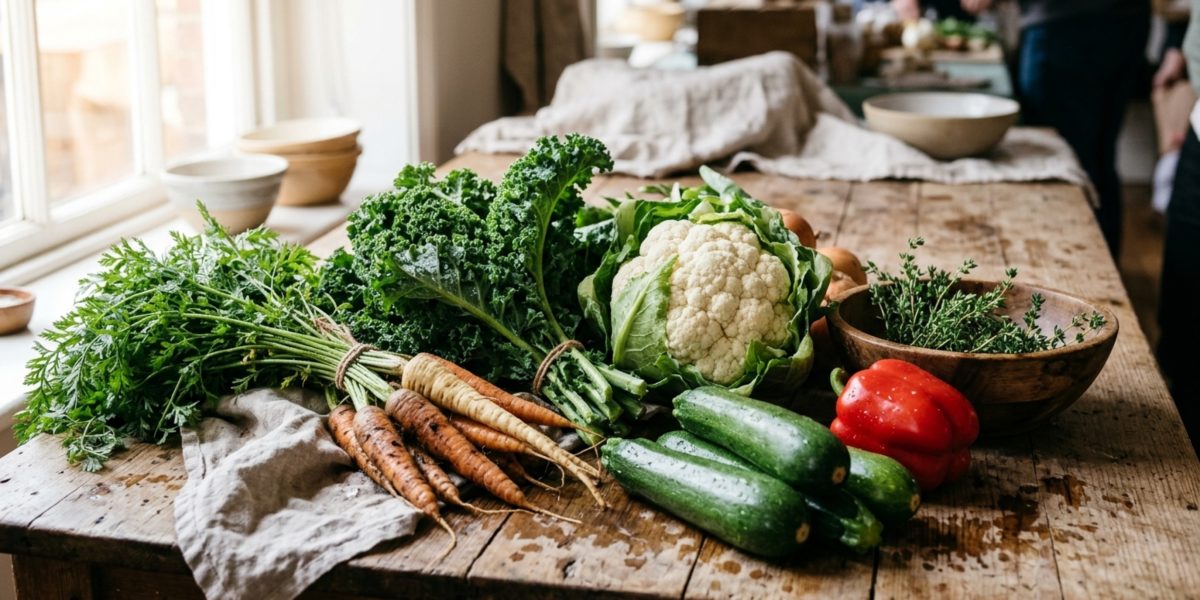
Open five different lists of low histamine vegetables and the same three names keep turning up on the avoid side: tomato, spinach and aubergine. Almost everything else in the produce aisle lands in the Low column, and the real disagreements are about a handful of borderline vegetables and about how vegetables are stored and cooked. This guide sorts the produce aisle using the ratings on our histamine intolerance food list, shows what measured data does and does not say, and covers the habits that matter more than the vegetable itself.
The short answer. Rated Low: root vegetables, brassicas such as broccoli and kale, courgette, cucumber, squash, peppers, salad leaves other than spinach, the onion family, green beans, peas and asparagus. Rated Moderate (test): avocado, mushrooms, legumes and plain tofu. Skip at first: tomato in any form, spinach, aubergine, and anything fermented or pickled.
The Vegetables That Work Most Days
Our food list describes ratings as the typical fresh product, bought and stored well. Low means the food is usually well tolerated during an elimination phase when it is fresh. By that standard most vegetables qualify, and they should fill most of your plate.
| Vegetable | Rating | Notes |
|---|---|---|
| Carrots, parsnips, beetroot | Low | Fresh root vegetables |
| Potatoes and sweet potatoes | Low | Fresh, not processed |
| Broccoli, cauliflower, cabbage, kale | Low | Fresh brassicas |
| Courgette, cucumber, pumpkin, squash | Low | Fresh |
| Lettuce, rocket, chard | Low | Spinach is the exception |
| Bell peppers | Low | Fresh |
| Asparagus, green beans, peas | Low | Fresh or frozen |
| Onion, leek, garlic | Low | Fresh, though some people with gut symptoms react for other reasons |
| Fresh herbs such as parsley, thyme and rosemary | Low | A Low-rated way to add flavour |
Brussels sprouts are not rated on our list. They are close relatives of cabbage and broccoli, so treat them as a food to test. Pumpkin deserves a mention because it is one of the few vegetables with a direct measurement behind it: the Nutrients review found no histamine in any of its 13 pumpkin samples, and our low histamine pumpkin recipes put that to use.
What the Measured Data Actually Shows
Most vegetable lists on the internet are copied from one another, and few were built from lab results. The best single source is a 2021 review in Nutrients, Low-Histamine Diets: Is the Exclusion of Foods Justified by Their Histamine Content?, which pooled amine measurements from foods on the Spanish market and compared them with ten published low histamine diets. Its vegetable results are short, and worth reading slowly.
| Vegetable | Samples | Average histamine | Range |
|---|---|---|---|
| Tomato | 53 | 2.5 mg/kg | Not detected to 17 mg/kg |
| Spinach | 18 | 31.8 mg/kg | 9.5 to 69.7 mg/kg |
| Aubergine | 23 | 39.4 mg/kg | 4.2 to 100.6 mg/kg |
| Sauerkraut | 5 | 43.7 mg/kg | 7.4 to 80.1 mg/kg |
| Pumpkin, avocado, olives, soybeans | 13, 5, 5 and 5 | Not detected | Not detected |
Two things stand out. First, spinach and aubergine really do contain measurable histamine, which is why we rate them High. Second, tomato contains much less than its reputation suggests. It sits on avoid lists mostly because it is a reported liberator, a food said to make the body release its own histamine. The same review notes that this mechanism has not been worked out and that there are no human studies behind it. Tomato stays on the skip list during elimination. Whether to try it later is a reintroduction question, and our tomato article covers it.
The limits matter too. The samples came from one country, produce varies from crop to crop, and the paper has no figures for cabbage, potatoes or mushrooms, so a Low rating for those rests on tolerance reports and on the absence of a concern, not on a measurement. Where the data is thin, we say so and use the word test.
Tomato, Spinach and Aubergine, the Usual Suspects
These three are rated High on our food list, and tomato carries the liberator label as well. Skipping them for the elimination phase is the simplest advice, and every swap below is an everyday food rated Low.
| If a recipe calls for | Try | Why it works |
|---|---|---|
| Tomato sauce or passata | Roasted red pepper, carrot and beetroot blended with olive oil and fresh herbs | All three are Low, and the colour and sweetness are close |
| Raw tomato in a salad | Cucumber, bell pepper or grated carrot | Fresh, crunchy and Low |
| Spinach in a pie or pasta | Kale, chard or lettuce | Our list notes spinach as the exception among leaves |
| Aubergine in a bake | Courgette | Similar texture once roasted |
| Ketchup | Fresh peppers roasted at home (jarred ones usually contain vinegar), blended with a pinch of salt | Ketchup is rated High |
If tomato is the one you miss, our article on tomatoes histamine liberator goes through fresh, canned and cooked tomato in detail and how to test it. Spinach has a separate wrinkle, since many people avoid it for oxalates and not for histamine, which our piece on spinach and oxalates explains. For sauces without tomato, our low histamine sauces and condiments are a good starting point.
The Borderline Group Worth Testing Later
Four vegetable foods sit in the Moderate (test) band, which means foods to introduce one at a time. None of them need to be avoided forever. They simply do not belong in the first weeks.
Avocado
Avocado is often listed as a liberator, but histamine was not detected in the five avocado samples in the Nutrients review. Our list rates it Moderate (test), so try it once symptoms are settled. The full reasoning is in our article on the avocado histamine liberator claim.
Mushrooms
Our list rates mushrooms Moderate (test) and says to avoid them if they are old or dried. A mushroom that looks tired is a mushroom to skip. Some people also react for reasons unrelated to histamine, which we cover in mushrooms and mold allergy.
Legumes and tofu
Legumes are rated Moderate (test) on our list, so introduce them one at a time after the basic Low list is settled. Peas and green beans are the exception and are Low. Plain tofu is not fermented and is also in the test group, while soy sauce, miso and tempeh are fermented and rated High.
Fermented and Pickled Vegetables Are the Real Hazard
If you only remember one rule, remember this one. Sauerkraut, kimchi and pickles are rated High on our food list because they are fermented, and the Nutrients review found that fermented foods were the only group excluded by all ten of the low histamine diets it compared. In its data, sauerkraut averaged 43.7 mg/kg of histamine, and the amounts in fermented foods vary widely between products.
Pickled vegetables are worth a second look at the label as well. Vinegar is a fermented ingredient and is on our avoid list during elimination, so a jar of pickled beetroot, gherkins or peppers is a problem even if the vegetable itself is Low. Olives are not rated on our list. The review found no histamine in five olive samples, but many table olives are brined or fermented, so treat them as a food to test and check the brine for vinegar. Our guide to low histamine fermented foods covers fermented products in more detail, and hidden histamine in food lists the ready-made products that quietly contain them.
Fresh Does Not Mean Histamine Free
Our food list states it plainly: histamine forms when bacteria break down the amino acid histidine, so it builds up as food ages, even in the fridge. Vegetables contain far less protein than meat or fish, so the risk is probably lower, though we have no data on it, and a vegetable that was Low on the day it was picked is not automatically Low a week later. We have not found published data on how quickly histamine rises in cut or cooked vegetables, so what follows are food safety habits and precautions, not tested thresholds.
- Buy fresh and use it soon. Choose firm vegetables without soft spots and plan meals around what is in the fridge.
- Cut away damage. The FDA produce guidance says to cut away damaged or bruised areas and to throw away produce that looks rotten.
- Keep it cold. The same guidance says perishable produce belongs in a refrigerator at 4°C (40°F) or below, and that pre-cut or packaged produce should be refrigerated.
- Be wary of old bagged salad. Pre-cut leaves go off faster than whole heads, so buy them on the day you plan to eat them.
- Wash under running water before preparing, without soap.
Frozen, Canned and Jarred Vegetables
Frozen vegetables are a practical option, and our list explicitly accepts peas, green beans and asparagus fresh or frozen. Plain frozen peas, green beans or asparagus can be a better choice than fresh produce that has sat in the drawer for a week. Check that the bag contains only the vegetable, without sauce, seasoning or added stock.
Canned and jarred vegetables are not rated on our list, and the product matters more than the vegetable. Look for vinegar, stock cubes, yeast extract, tomato and added flavourings on the label, since stock cubes and yeast extract are rated High. Plain canned vegetables are a food to test once your symptoms have settled, so read the label first. Anything in a sauce, brine or marinade needs a closer look.
Cooking Does Not Fix Old Vegetables
Histamine is heat stable, so boiling, roasting or steaming will not remove histamine that is already in a food. Cooking does not create histamine in fresh vegetables, but food that is cooked and then stored slowly or for long can still build it up. Roasting, steaming, boiling and quick stir-frying are all good methods, and olive oil, salt and fresh herbs give enough flavour without anything that needs a label check. The method matters less than the starting point.
Soup is where the two lessons meet. A vegetable soup built on roasted vegetables and hot water is an excellent low histamine meal, while one built on a stock cube or a meat or bone stock is not, because stock and stock cubes are rated High on our list. Our low histamine soup recipes show how to build flavour without them.
Leftover Vegetables and the Freezer
Cooked vegetables follow the usual leftover rules. The USDA leftovers and food safety page says cooked food should be refrigerated within two hours, or within one hour in hot weather above 32°C (90°F), kept in the fridge for no more than three to four days and reheated to 74°C (165°F). That is a food safety ceiling, not a histamine guide, and histamine builds up as food ages, so reheat only once. For histamine, many people take a more cautious route, which is to freeze single portions the same day. That is a common precaution in low histamine eating and not a tested threshold, and freezing does not remove histamine that has already formed.
Roasted root vegetables, blended soups, cooked brassicas and mashed potato all freeze well in single portions. Wilted salad leaves do not freeze well. Cooked rice can be frozen, but cool it quickly first. Our low histamine meal prep guide explains a freeze-first routine, and the roasted sides in our low histamine thanksgiving plan work as a template for a big weekly batch.
How to Test a Borderline Vegetable
Testing is how a Moderate (test) vegetable either earns a place on your plate or stays off it. Wait until your symptoms have settled on the basic Low list, and then follow a simple routine.
- Pick one food, such as avocado or mushrooms, and test only that.
- Choose a fresh, plain version, without sauce, cheese, vinegar or other test foods.
- Eat a small portion first, and note when any symptoms start.
- Write down what you ate, how it was stored and any symptoms, so a pattern can show up.
- Leave a clear gap before the next test, so two foods cannot blame each other.
If you react, the vegetable is not necessarily gone for good, since tolerance may change over time. A doctor or dietitian can help you tell a histamine reaction from an allergy or a digestive issue, and our article on how long to stay on a low histamine diet covers the longer arc.
A Week of Eating Vegetables Without the Usual Suspects
It helps to think in templates, not recipes. A tray of roasted carrots, parsnips and courgette with olive oil and thyme makes lunch on the day and freezable portions for later. Broccoli or kale steamed for a few minutes goes with almost any protein. A big salad of lettuce, cucumber, pepper and grated carrot with a plain olive oil dressing covers the raw side, and our low histamine salad dressing recipes remove the shop-bought bottle problem. For dinners that use a single tray, our low histamine one pan dinners are built around exactly these vegetables. Fruit-vegetables such as courgette and pepper replace tomato and aubergine in many dishes, and our guide to low histamine fruits covers the sweeter half of the produce aisle.
When Vegetables Are Not the Problem
Symptoms after a vegetable meal do not always mean histamine. Cabbage, broccoli and similar vegetables can cause gas or bloating in some people, and our food list notes that some people with gut symptoms react to onion, leek and garlic for other reasons. Spinach is high in oxalates, and tomato, aubergine, potatoes and peppers belong to the nightshade family, although there is little evidence for a general nightshade problem. If bloating is your main symptom, our article on histamine and IBS explains how the two overlap, and how to look at both. Persistent bloating, especially in women over 50, needs a doctor’s review.
Cutting out many vegetables without need can also leave you short of fibre and nutrients. Keep the list of foods you avoid as short as your results justify, and widen it again as soon as you can.
When to Get Medical Help
Flushing, headache, a blocked nose or a racing heart after a meal can have several causes, including allergy, so discuss recurring symptoms with your doctor before building a long list of avoided foods. A restrictive diet is worth discussing with a doctor or dietitian first if you are pregnant, losing weight without trying, or planning meals for a child.
If you have been prescribed adrenaline (epinephrine), use it first, and call emergency services immediately even if you feel better. Antihistamines are not a substitute. Signs include swelling of the lips, tongue or throat, difficulty breathing or swallowing, wheezing, a hoarse voice, or feeling faint, pale or floppy.
Vegetable questions people ask
Are potatoes low histamine?
Yes, fresh potatoes and sweet potatoes are rated Low on our food list. The note is that they should be fresh and not processed, so plain boiled, baked or roasted potatoes are fine while ready-made mash, fried products and seasoned crisps need a label check.
Are tomatoes low histamine?
No. Tomato, tomato paste and ketchup are rated High and are also on the liberator list. The 2021 Nutrients review measured an average of 2.5 mg/kg in 53 tomatoes, and notes that the liberator mechanism has not been worked out and no human clinical studies support it. Tomato stays on the skip list during elimination, and reintroduction is a later question.
Why is spinach on the avoid list?
Spinach is rated High on our food list. In the 2021 Nutrients data it averaged about 32 mg/kg across 18 samples, which is far more than the 2.5 mg/kg measured in tomato, while pumpkin had none detected. Lettuce, rocket, chard and kale are Low and make good replacements.
Are frozen vegetables low histamine?
Frozen vegetables are a practical choice. Our food list says peas, green beans and asparagus are fine fresh or frozen. Check that the bag contains only the vegetable, without sauces, seasoning or added stock.
Can I make vegetable soup on a low histamine diet?
Yes, as long as the base is not a stock cube or a ready-made or meat or bone stock, all rated High on our list. Roast or soften the vegetables, blend them with hot water, season with salt and fresh herbs, and freeze leftover portions the same day.
Do I need to avoid avocado and mushrooms?
They are rated Moderate (test) on our food list rather than avoided. Avocado showed no histamine in the 2021 Nutrients samples, and our list says to test them once your symptoms have settled and to skip any that are old or dried.
Medical disclaimer: This content is for informational purposes only and does not constitute medical advice. Always consult a qualified healthcare provider before starting any supplement regimen.
→ Try the Histamine Load Calculator — find out if your daily food choices are pushing you over your histamine threshold.
→ Track your reactions with the Histamine Food Diary — identify your personal trigger foods automatically.
→ Ready to start? Use the 4-Week Elimination Diet Planner — interactive daily tasks with progress tracking.
→ Build your meal with the Low Histamine Meal Builder — instant histamine scoring as you select ingredients.