
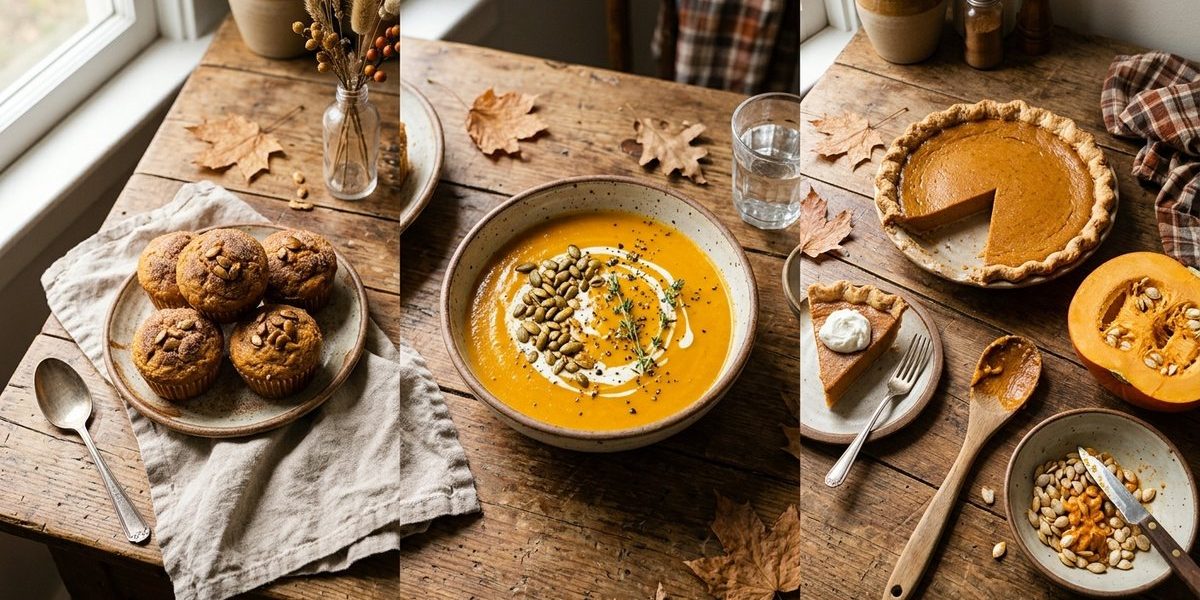
Pumpkin is one of the easier autumn foods to keep when you are eating low histamine, which is good news, because almost every fall recipe on the internet seems to involve it. The trouble is everything that usually comes with it: stock cubes in the soup, yeast in the bread, a long list of warm spices, and a pie filling made days ahead. These low histamine pumpkin recipes keep the flavor of the season and drop the ingredients that tend to cause problems. You will find eight complete recipes below, from a roasted soup to a proper pie, plus practical notes on canned versus fresh pumpkin, spice swaps and how to store what you make.
Every recipe here uses ingredients rated low on our histamine intolerance food list, or flags clearly where an ingredient is one to test for yourself. Nothing is fermented, nothing relies on a long simmer of bones, and nothing needs to sit in the fridge for days before you eat it.
Why Pumpkin Works on a Low Histamine Diet
Pumpkin and other winter squash are rated low on our food list. A 2021 review that compared published low histamine diets with measured amine levels in foods, Low-Histamine Diets: Is the Exclusion of Foods Justified by Their Histamine Content?, reported no detectable histamine in pumpkin samples. The same review noted that pumpkin does contain putrescine, a different biogenic amine. Some researchers have suggested that amines like putrescine may compete with histamine for the DAO enzyme, but that idea has not been tested properly in people with histamine intolerance, so treat it as a theory rather than a reason to avoid pumpkin.
The practical takeaway is simple. Pumpkin itself is a sensible base for autumn cooking, and many people on an elimination diet use it regularly. What matters more is everything you cook with it and how long the finished dish sits around before you eat it. Tolerance is individual, so if you have never eaten much squash during your elimination phase, start with a modest portion and see how it goes.
Fresh Roasted Pumpkin or a Can From the Shelf
Roasting your own pumpkin gives you the most control. A small sugar pumpkin or pie pumpkin, a butternut squash, or a kabocha all work in these recipes. Halve it, scoop out the seeds (keep them for recipe seven), brush the cut sides with a little olive oil and roast cut side down at 400°F (200°C) for 40 to 50 minutes until a knife slides in easily. Scoop out the flesh and mash or blend it. One medium sugar pumpkin gives a few cups of puree, enough for most of the recipes below.
Canned pumpkin is the obvious shortcut, and there is no published data we know of showing that plain canned pumpkin is higher in histamine than home roasted. The honest answer is that nobody has measured it in a way that settles the question. If you use canned, pick a can that lists only pumpkin as the ingredient. Avoid “pumpkin pie filling”, which is a different product with sugar, spices and sometimes preservatives already added. Once a can is open, treat it like any cooked food: transfer the leftover puree to a clean container, refrigerate it straight away and use it within a day or freeze it.
A simple way to compare. If you are unsure about canned pumpkin, make the same recipe twice in the same week, once with home roasted puree and once with canned, keeping everything else identical. Note how you feel after each. A food diary turns a guess into something you can actually see.
The Spice Question Most Recipes Skip
Classic pumpkin pie spice is a blend of cinnamon, ginger, nutmeg, cloves and sometimes allspice. Spices are an area where low histamine food lists often disagree, and there is little measured data behind the ratings you will see online. Some lists flag cinnamon, nutmeg or cloves as possible triggers, others do not. The honest position is that tolerance varies from person to person.
A practical approach is to start with the spices you already know you tolerate. Some people find fresh ginger or a small amount of cinnamon an easier place to start. If you are early in your elimination phase, make your first batch with one spice only, then add the others back one at a time in later batches. Buy spices in small jars and replace them regularly rather than keeping a tin for years. Vanilla extract contains alcohol, so if alcohol is a problem for you, use a scraped vanilla pod or alcohol-free vanilla powder instead. All of the recipes below list spice amounts as optional ranges so you can start low.
The Eight Recipes
Each recipe makes enough for a family meal or a small batch of baking. Where a recipe makes more than you will eat within a day, the storage section further down explains how to freeze portions while they are fresh.
1. Roasted Pumpkin Soup Without Stock Cubes
Stock cubes and long simmered stocks are rated high on our food list, which is why this version builds flavor from roasting instead. If you like soup, our low histamine soup recipes use the same approach.
Ingredients: 1 small sugar pumpkin or 1 butternut squash (about 2 lb, 900 g), 1 onion, 2 cloves garlic, 2 carrots, 3 tablespoons olive oil, a few sprigs of fresh thyme, 4 cups (1 liter) water, salt, and a splash of fresh whole milk or cream to finish if you tolerate dairy.
Method: Heat the oven to 400°F (200°C). Peel and cube the pumpkin, roughly chop the onion and carrots, and leave the garlic cloves whole in their skins. Toss everything with the olive oil, salt and thyme and roast on a large tray for 35 to 40 minutes until soft and caramelized at the edges. Squeeze the garlic out of its skin, then blend all the vegetables with the water until smooth, adding more water to reach the thickness you like. Warm through in a pan, season and stir in the milk or cream just before serving. Top with toasted pumpkin seeds.
2. Pumpkin Muffins With Baking Powder
Baking powder gives these muffins their rise, so there is no yeast and no long proving time.
Ingredients: 1 cup (250 g) pumpkin puree, 2 eggs, 1/3 cup (80 ml) light olive oil or melted butter, 1/2 cup (120 ml) maple syrup, 1 3/4 cups (220 g) plain flour, 2 teaspoons baking powder, 1/2 teaspoon baking soda, a pinch of salt, and 1/2 to 1 teaspoon ground cinnamon or 1 teaspoon finely grated fresh ginger.
Method: Heat the oven to 350°F (180°C) and line a 12 hole muffin tin. Whisk the pumpkin, eggs, oil and maple syrup together in one bowl. In another bowl mix the flour, baking powder, baking soda, salt and spice. Fold the wet ingredients into the dry until just combined; a few lumps are fine. Spoon into the cases and bake for 20 to 22 minutes until risen and a skewer comes out clean. Cool on a rack. Eat fresh or freeze the same day.
3. Simple Pumpkin Bread
This is a quick bread, closer to a loaf cake than a yeasted loaf. For savory bread that still uses no yeast, see our low histamine bread recipes.
Ingredients: 1 1/2 cups (375 g) pumpkin puree, 2 eggs, 1/2 cup (120 ml) melted butter or light olive oil, 2/3 cup (130 g) light brown sugar or 1/2 cup maple syrup, 2 cups (250 g) plain flour, 1 teaspoon baking soda, 1 teaspoon baking powder, 1/2 teaspoon salt, and spice to taste, starting with 1/2 teaspoon cinnamon. Optionally add a handful of pumpkin seeds on top.
Method: Heat the oven to 350°F (180°C) and grease and line a 2 lb loaf tin. Beat the pumpkin, eggs, butter and sugar until smooth. Sift in the flour, baking soda, baking powder, salt and spice and fold until no dry flour remains. Scrape into the tin, scatter with pumpkin seeds and bake for 55 to 65 minutes until a skewer comes out clean. Cool for 10 minutes in the tin, then turn out. Slice and freeze what you will not eat within a day or two.
4. Pumpkin Pie With a Fully Set Custard
Pumpkin pie is an egg custard, so it needs to be baked until fully set. The safe minimum internal temperature for egg dishes listed in the FoodSafety.gov safe minimum internal temperatures chart is 160°F (71°C). Fully cooked eggs are also the sensible choice if you are wary of egg white; if you have read that raw egg white is a histamine liberator, our article on where the egg white liberator claim came from explains why the evidence is weak and why fully cooked eggs are generally considered fine.
Pastry: 1 1/4 cups (160 g) plain flour, a pinch of salt, 1/2 cup (115 g) cold butter in cubes, and 3 to 4 tablespoons ice water. Rub the butter into the flour and salt until it looks like breadcrumbs, add water a spoonful at a time until it just holds together, wrap and chill for 30 minutes. Roll out, line a 9 inch pie dish and chill again while you make the filling.
Filling: 2 cups (450 g) pumpkin puree, 3 eggs, 3/4 cup (180 ml) fresh whole milk or cream, 1/2 cup (120 ml) maple syrup or 1/2 cup light brown sugar, a pinch of salt, and 1/2 to 1 teaspoon cinnamon plus 1/2 teaspoon ground ginger if you tolerate them.
Method: Heat the oven to 400°F (200°C). Line the chilled pastry with baking paper and baking beans and bake for 15 minutes, then remove the paper and beans and bake 5 minutes more. Turn the oven down to 350°F (180°C). Whisk all the filling ingredients until smooth, pour into the pastry case and bake for 45 to 55 minutes. The center should be set with only a very slight wobble, and a thermometer pushed into the middle should read at least 160°F (71°C). Cool, then refrigerate within two hours. Serve with fresh whipped cream made on the day.
5. Pumpkin Oat Pancakes
A good weekend breakfast that uses up the last of a batch of puree. If you want more morning ideas, our low histamine breakfast ideas list has plenty.
Ingredients: 1 cup (90 g) rolled oats, 1/2 cup (125 g) pumpkin puree, 1 egg, 3/4 cup (180 ml) fresh milk or an oat drink you tolerate, 1 tablespoon maple syrup, 1 teaspoon baking powder, a pinch of salt, and butter or oil for the pan.
Method: Blend the oats into a coarse flour. Add the pumpkin, egg, milk, maple syrup, baking powder and salt and blend until smooth. Let the batter rest for 5 minutes so the oats absorb the liquid. Heat a frying pan over medium heat with a little butter, pour in small rounds of batter and cook for 2 to 3 minutes per side until golden and cooked through. Serve straight away with maple syrup and sliced pear or ripe banana.
6. Pumpkin and Chicken Traybake
A one tray dinner that comes together in under an hour. Buy the chicken as close to cooking day as you can, keep it cold, and cook it the day you buy it or freeze it straight away.
Ingredients: 4 chicken thighs or 2 chicken breasts, about 1 1/2 lb (700 g) pumpkin or butternut squash in chunks, 1 red onion in wedges, 2 cloves garlic, 3 tablespoons olive oil, a few sprigs of fresh rosemary or sage, salt, and a handful of green beans added near the end.
Method: Heat the oven to 425°F (220°C). Toss the pumpkin, onion and garlic with two tablespoons of oil, salt and herbs and spread on a large tray. Rub the chicken with the remaining oil and salt and nestle it among the vegetables. Roast for 30 to 35 minutes, adding the green beans for the last 10 minutes. The chicken is done when a thermometer reads 165°F (74°C) in the thickest part. Serve right away. The same fast, high heat logic runs through our low histamine one pan dinners.
7. Roasted Pumpkin Seeds
Pumpkin seeds are rated low on our food list, and the ones you scoop out of a fresh pumpkin are as fresh as seeds get.
Ingredients: seeds from one pumpkin, 1 teaspoon olive oil, and a good pinch of salt.
Method: Rinse the seeds in a sieve and pull away the stringy flesh. Dry them well on a clean towel. Toss with the oil and salt, spread in a single layer on a baking tray and roast at 325°F (160°C) for 15 to 20 minutes, stirring halfway, until they are lightly golden and crisp. Cool completely before storing in an airtight jar. Use them on soup, salads and oats, or as a snack on their own.
8. Creamy Pumpkin Rice
This is a risotto style dish without wine or stock. The pumpkin puree makes it creamy, and a little butter and fresh soft cheese finish it.
Ingredients: 1 cup (200 g) arborio or other short grain rice, 1 small onion finely chopped, 1 tablespoon olive oil, 1 tablespoon butter, about 4 cups (1 liter) hot water, 1 cup (250 g) pumpkin puree, salt, a handful of chopped fresh parsley or sage, and 2 tablespoons fresh mascarpone or cream cheese if you tolerate them.
Method: Soften the onion in the oil and butter for 5 minutes. Add the rice and stir for a minute until coated. Add the hot water a ladle at a time, stirring and letting each addition absorb before the next, for about 18 minutes until the rice is tender. Stir in the pumpkin puree and salt and cook for 2 minutes more, then take off the heat and stir in the herbs and soft cheese. Eat straight away.
Cooked rice needs quick cooling. Cooked rice can carry spores of Bacillus cereus, a bacterium that can cause food poisoning if rice is left warm for a long time. If you have leftovers, spread them out in a shallow container to cool quickly, refrigerate within two hours at most, and reheat only once, to 165°F (74°C) all the way through. For histamine purposes, eating it on the day is the better choice anyway.
Swaps for Common Pumpkin Recipe Ingredients
Most pumpkin recipes you find online can be adapted with a handful of swaps. This table covers the ones that come up most often.
| Usual ingredient | Why it can be a problem | Swap to try |
|---|---|---|
| Stock cubes or long simmered stock | Rated high on our food list | Water plus roasted vegetables, fresh herbs and salt |
| Yeast in breads and rolls | Fermented doughs such as sourdough are rated high on our food list | Baking powder and baking soda quick breads |
| Pumpkin pie filling in a can | Added spices, sugars and other ingredients | Plain 100% pumpkin puree or home roasted pumpkin |
| Evaporated or condensed milk | Not rated on our food list, so fresh is the simpler choice | Fresh whole milk or cream |
| Walnuts or pecans in breads | Walnuts are avoided on our list, and pecans are not rated, so test them | Pumpkin seeds |
| Chocolate chips | Commonly reported as a liberator | Leave out, or test carob chips |
| Lemon juice or orange zest | Citrus is a common liberator | A little extra fresh ginger or a pinch of salt for brightness |
| Sour cream or yogurt topping | Fermented dairy is rated high | Fresh whipped cream, fresh ricotta or mascarpone |
If you want to go further with seasonal baking, our low histamine desserts and low histamine chocolate alternatives both pair well with the pie and bread above.
How to Store and Freeze Pumpkin Dishes
Histamine is heat stable, so cooking, reheating and freezing do not remove histamine that has already formed in a food. What freezing does is pause the slow build up that happens as cooked food sits in the fridge. That is why the timing of when you freeze matters more than the freezer itself.
The USDA guidance on leftovers and food safety says cooked food should go into the fridge within two hours, that leftovers keep for three to four days in the fridge, and that leftovers should be reheated to 165°F (74°C). For a low histamine kitchen, a stricter version of that tends to work better: eat what you can on the day, and freeze the rest in single portions as soon as it has cooled, rather than eating your way through it over several days.
- Soup: cool quickly in a wide container, then freeze in single portions. Thaw in the fridge overnight or reheat from frozen, once, to 165°F (74°C).
- Muffins and bread: freeze the day they are baked. Wrap slices individually so you can take out one at a time.
- Pie: refrigerate within two hours of baking and eat within a day if you are sensitive. Pumpkin pie can be frozen, though the texture softens a little.
- Puree: freeze in half cup or one cup portions in labeled bags, flattened so they thaw quickly.
- Pumpkin rice and the traybake: best eaten the day they are made. Freeze any leftover traybake promptly; leftover rice is better avoided.
Our guide to low histamine meal prep explains a freeze first system that works well with everything in this article.
Planning a Pumpkin Week
One medium pumpkin plus a can or two of plain puree can cover most of a week if you plan it. Roast the pumpkin on Sunday, eat the soup that night and freeze the rest in portions. Use some of the puree for muffins and freeze them the same day. Make the traybake midweek with fresh squash chunks. Save the pie for a weekend or a gathering, and make the pancakes with whatever puree is left. Toast the seeds after the soup vegetables come out, once the oven has dropped to 325°F (160°C).
This kind of rotation keeps one ingredient working hard without you eating the same leftovers for days. It also means that if a recipe does not suit you, you will know quickly which one it was. For autumn gatherings, the pie and the soup fit naturally into a bigger menu, and our low histamine holiday recipes guide covers the rest of the table. If the turkey is the centrepiece, our low histamine thanksgiving plan covers the bird, gravy without stock and a freezer system for the leftovers.
When Pumpkin Does Not Seem to Agree With You
If you notice symptoms after a pumpkin dish, look at the whole recipe before blaming the pumpkin. The usual suspects are the spices, a store bought ingredient you did not check, dairy, or the age of the dish. A pie eaten on day three has had more time for histamine to build up than the same pie eaten the evening it was baked. Keeping a short diary of what you ate, how it was stored and how you felt makes these patterns much easier to spot.
If symptoms are frequent or severe, or if you are not sure whether you are dealing with histamine intolerance, an allergy or something else, talk to your doctor. A diet is a tool for managing symptoms, not a substitute for a proper diagnosis. Seek emergency care straight away for swelling of the lips, tongue or throat, difficulty breathing, or feeling faint after eating, since these can be signs of anaphylaxis. Adrenaline (epinephrine) is the first treatment for anaphylaxis; antihistamines are not a substitute.
Pumpkin questions that come up every fall
Is pumpkin low in histamine?
Pumpkin is rated low on our food list, and a 2021 review of food amine data reported no detectable histamine in pumpkin samples. It does contain putrescine, another amine, but there is no good evidence that this causes problems for people with histamine intolerance. Individual tolerance still varies.
Can I use canned pumpkin on a low histamine diet?
Many people do. There is no published data showing plain canned pumpkin is higher in histamine than home roasted, but it has not been studied well either. Choose a can that lists only pumpkin, avoid pumpkin pie filling, refrigerate leftovers straight away and test it against home roasted puree if you are unsure.
Is pumpkin pie spice safe for histamine intolerance?
Tolerance varies. Low histamine food lists disagree about cinnamon, nutmeg and cloves, and there is little measured data behind those ratings. Start with one spice you already tolerate, such as fresh ginger or a small amount of cinnamon, and add the others back one at a time.
Are pumpkin seeds low histamine?
Pumpkin seeds are rated low on our food list. Seeds you scoop from a fresh pumpkin and roast yourself are the freshest option. Store roasted seeds in an airtight jar and use them while they still taste fresh.
How long can I keep pumpkin soup or pie in the fridge?
Food safety guidance allows three to four days, but for histamine intolerance it is better to eat these dishes on the day or within a day, and freeze the rest in single portions as soon as they have cooled. Freezing pauses histamine build up but does not remove histamine that has already formed.
Medical disclaimer: This content is for informational purposes only and does not constitute medical advice. Always consult a qualified healthcare provider before starting any supplement regimen.
→ Build your meal with the Low Histamine Meal Builder — instant histamine scoring as you select ingredients.