
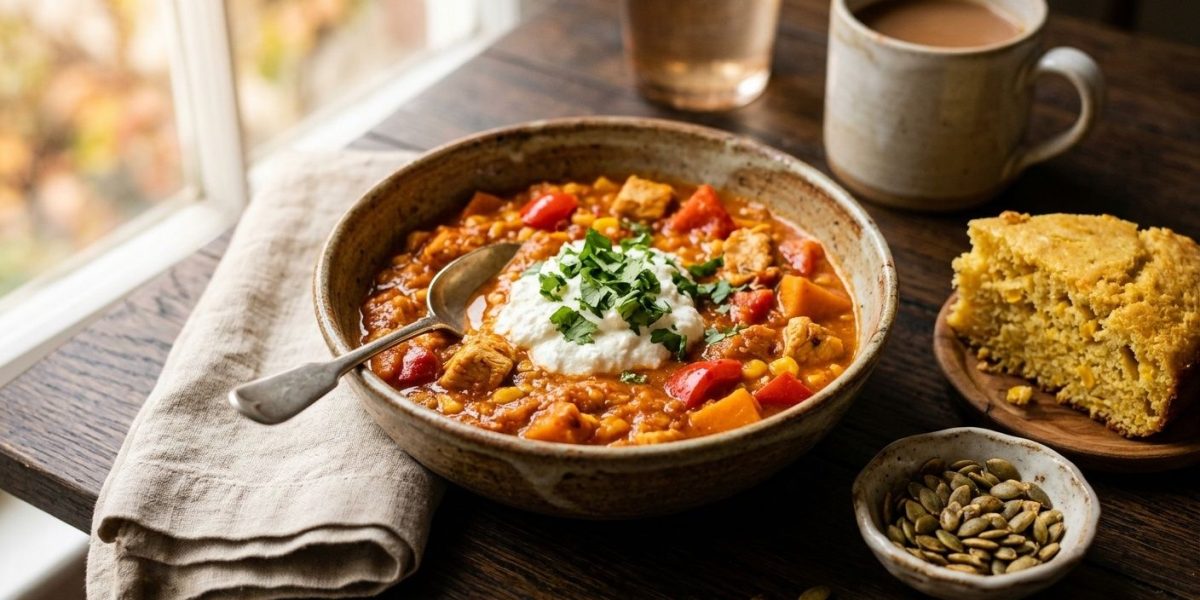
A bowl of low histamine chili sounds like a contradiction. Classic chili leans on tomatoes, a stock cube, a heap of chili powder, sometimes beer, and a topping of aged cheddar and sour cream, and almost every one of those ingredients is rated High or Moderate (test) on a low histamine diet. Yet the thing people actually miss about chili is not the tomato. It is a thick, warming, spoon-coating stew with a little heat, something to eat out of a big bowl on a cold night. That part can be rebuilt, and this guide shows how, with four recipes, a seasoning plan for each stage of the diet and a storage routine that gets leftovers cold and frozen quickly.
Every rating here follows our histamine intolerance food list, which sorts foods into Low, Moderate (test) and High. Where an ingredient is not rated on our list, we say so and treat it as something to test, rather than guessing.
The short version. Replace tomato with a blended base of roasted red bell pepper, carrot and pumpkin or sweet potato. Use water instead of stock. Build flavor with onion, garlic, oregano, black pepper and fresh coriander first, and add cumin, sweet paprika and chili only after you have tested them. Use whole cuts of fresh chicken, turkey or beef rather than mince, treat beans as a test food, and freeze leftovers in portions the day you cook.
Why Ordinary Chili Is a Problem
It helps to see which parts of a standard recipe cause trouble, because each one has its own fix.
- Tomatoes. Tomato is rated High on our list and is also a suspected histamine liberator. Canned tomatoes, passata, tomato paste and ketchup are all made from tomato, so treat them the same way, and ketchup also contains vinegar. Our article on tomatoes as a histamine liberator explains both sides of that.
- Stock cubes and bouillon. These are rated High, and so is bone broth. Many chili recipes call for a cup or two of beef stock.
- Chili powder and spice mixes. Chili, cayenne and paprika are Moderate (test) on our list, and ready-made chili seasoning can add tomato powder, yeast extract or flavor enhancers on top.
- Ground beef. Freshly minced meat is Moderate (test), because grinding exposes more surface to bacteria than a whole cut does.
- Beans. Legumes are Moderate (test) on our list. Our list notes that they are not high in histamine, but some beans are often poorly tolerated.
- Beer, vinegar, lime and hot sauce. Beer is fermented, vinegar is avoided during elimination, citrus is a suspected liberator, and many hot sauces contain vinegar.
- Toppings. Aged cheddar and sour cream are rated High. Avocado is Moderate (test).
Then there is the leftover problem. Chili is usually made in a big pot and eaten over several days, and histamine can keep forming slowly while cooked food sits in the fridge. Cooking it again does not remove histamine that has already formed. So the storage routine later in this guide is as important as the recipe itself.
Building a Chili Base Without Tomatoes
Tomato does three jobs in chili: it gives color, body and a slight sweetness. A blend of roasted red bell pepper, carrot and pumpkin or sweet potato covers all three. Bell peppers, carrots, pumpkin, squash and sweet potato are all rated Low on our list when fresh, which is why this base appears in all four recipes below.
Red Pepper and Pumpkin Base (makes enough for one pot)
Ingredients: 3 large red bell peppers, 2 medium carrots, about 2 cups (300 g) peeled pumpkin, butternut squash or sweet potato cut into chunks, 2 tablespoons olive oil, salt, and about 1 cup (240 ml) water.
Method: Heat the oven to 400°F (200°C). Halve and seed the peppers, chop the carrots and pumpkin, toss everything with the oil and a pinch of salt, and roast for 30 to 35 minutes until soft and lightly charred at the edges. Blend with the water until smooth, adding a little more water if needed. The result is a thick, brick-colored sauce that behaves a lot like tomato passata in a pot.
Use the base on the day you make it, or freeze it in portions straight away. Do not keep a jar of it in the fridge for the week. For more ideas that use the same vegetables, see our low histamine pumpkin recipes and our guide to low histamine vegetables.
A note on color. Without tomato, chili tends to look orange rather than deep red. Using all red peppers and a little more pepper than pumpkin pushes the color toward red. Once you have tested it, a pinch of sweet paprika deepens it further.
Seasoning in Two Stages
Chili spices are where low histamine lists disagree most, and very little measured data exists for them. Our list rates chili, cayenne and paprika Moderate (test), and it does not rate cumin at all. That is a reason to split the seasoning into two stages instead of skipping flavor altogether.
| Ingredient | Rating on our list | When to use it |
|---|---|---|
| Fresh onion and garlic | Low | From the start |
| Fresh oregano | Low | From the start; dried herbs are not rated separately, so choose a plain single herb with no added ingredients |
| Black pepper and salt | Low | From the start |
| Fresh coriander (cilantro) | Low | From the start, added at the end |
| Fresh ginger and turmeric | Low | Optional, for warmth |
| Cumin | Not rated | Treat as a test food |
| Sweet paprika | Moderate (test) | After testing |
| Chili, chili powder, cayenne | Moderate (test) | After testing, mild before hot |
| Ready-made chili seasoning | Moderate (test) | Read the label; can contain tomato powder or yeast extract |
| Hot sauce | Not rated (vinegar is High) | Many contain vinegar |
Stage 1 Seasoning (elimination phase)
Per pot of four servings: 1 large onion, 3 cloves garlic, 1 tablespoon chopped fresh oregano (or 2 teaspoons plain dried oregano), 1 teaspoon freshly ground black pepper, salt to taste, and a big handful of chopped fresh coriander stirred in at the end. A teaspoon of finely grated fresh ginger adds a gentle warmth that stands in for some of the heat. This version tastes savory and herby rather than spicy, and it is still a satisfying bowl.
Stage 2 Seasoning (after testing)
Once your symptoms have settled and you have tested each spice on its own, add them one at a time: first 1 to 2 teaspoons ground cumin, then 1 teaspoon sweet paprika, and last a small amount of mild chili powder or a fresh mild chili. Hot chili can cause flushing, a runny nose and sweating in many people because capsaicin acts directly on heat-sensing nerves, so a reaction to chili is not always about histamine. Keeping notes helps you tell the difference.
Choosing the Meat
Our low histamine meat list rates fresh chicken, turkey, beef and lamb Low, and notes that whole cuts are safer than mince. That is the single biggest change from a standard chili recipe: dice a whole cut yourself instead of using ground meat.
- Chicken thighs or breasts. Rated Low. Thighs stay juicy in a stew. Cook within a day of purchase or freeze.
- Turkey breast. Rated Low. Dice it into small cubes for a texture close to ground meat.
- Beef chuck or stewing steak. Fresh beef is rated Low, but dry-aged beef is the exception to avoid. Ask the butcher or check the label.
- Ground beef or ground turkey. Freshly minced meat is Moderate (test). If you want to test it, buy it on the day you cook it and cook it that day.
Cook diced poultry to 165°F (74°C) and ground meat to 160°F (71°C), the minimums on the FoodSafety.gov safe minimum internal temperatures chart. Chili simmers well past those temperatures, but a thermometer is the only reliable check.
What About Beans?
Beans are a defining part of many chilis, and they can also cause digestive symptoms that are easy to mistake for a histamine reaction. Our list rates lentils, chickpeas and beans Moderate (test), with the note that they are not high in histamine but that some beans are often poorly tolerated. Measured data on this is limited. A 2021 review in Nutrients, Low-Histamine Diets: Is the Exclusion of Foods Justified by Their Histamine Content?, did not detect histamine in soybeans, although it found other amines in them, and it found much more histamine in fermented soy products, but it did not report kidney beans, black beans, chickpeas or lentils. The same review measured histamine in tomato and aubergine, which is part of why those vegetables stay off the list.
In practice, that means:
- Make your first chilis without beans, and use extra vegetables, sweet potato or a handful of quinoa for body. Quinoa is rated Low on our list.
- Peas and green beans are rated Low, so they can add color and a little bean-like texture without testing.
- When you test beans, add one type to a chili you already tolerate, and keep the portion small.
- Canned beans are convenient. Choose cans with just beans, water and salt, rinse them well, and check that there is no added vinegar or flavoring.
- If you cook dried kidney beans, soak them for at least five hours, discard the water, then boil them hard in fresh water on the stove for at least 10 minutes (many food safety educators advise 30) before they go into a slow cooker. Raw and undercooked kidney beans contain a natural lectin that can cause severe vomiting, and a slow cooker may not get hot enough to destroy it.
Recipe 1: White Chicken Chili With Cream Cheese
This is the easiest place to start because it skips the tomato question entirely. White chili is a pale, creamy stew of chicken, green peppers and herbs, and it uses ingredients that are almost all rated Low.
Serves 4. Ingredients: 1 1/2 pounds (680 g) fresh boneless chicken thighs, diced; 2 tablespoons olive oil; 1 large onion, diced; 3 cloves garlic, chopped; 2 green bell peppers, diced; 1 medium zucchini, diced; 2 teaspoons dried oregano; 1 teaspoon black pepper; salt; 3 cups (720 ml) water; 1 cup (150 g) frozen peas; 4 tablespoons (60 g) plain cream cheese; a large handful of fresh coriander. Optional after testing: 1 can cannellini beans, rinsed, and 1 teaspoon cumin.
Method: Heat the oil in a large pot and brown the chicken in batches, then set it aside. Cook the onion, garlic and green pepper in the same pot over medium heat for 6 to 8 minutes until soft. Add the zucchini, oregano, pepper and a good pinch of salt, return the chicken, and pour in the water. Simmer uncovered for 20 to 25 minutes until the chicken is tender and the liquid has reduced. Add the peas (and beans, if using) for the last 5 minutes. Take the pot off the heat and stir in the cream cheese until it melts into a creamy sauce, then finish with coriander. Check that the chicken has reached 165°F (74°C).
Plain cream cheese is rated Low on our list along with other fresh soft cheeses. Our guide to fresh dairy vs aged dairy explains why fresh cheese and aged cheese behave so differently.
Recipe 2: Turkey and Sweet Potato Chili
A red, tomato-free chili built on the pepper and pumpkin base, with sweet potato for body. Diced turkey breast gives a texture close to ground meat without the mince rating.
Serves 4. Ingredients: 1 1/2 pounds (680 g) fresh turkey breast, cut into small cubes; 2 tablespoons olive oil; 1 large onion, diced; 3 cloves garlic, chopped; 1 red bell pepper, diced; 1 large sweet potato, peeled and cut into small cubes; one batch of Red Pepper and Pumpkin Base; 1 to 1 1/2 cups (240 to 360 ml) water; Stage 1 seasoning; fresh coriander to finish.
Method: Brown the turkey in the oil in batches and set aside. Soften the onion, garlic and diced pepper for 6 to 8 minutes. Add the sweet potato, the base, the water and the Stage 1 seasoning, then return the turkey. Bring to a simmer, cover and cook gently for 25 to 30 minutes, stirring now and then, until the sweet potato is soft and starts to thicken the sauce. Mash a few cubes of sweet potato against the side of the pot if you want it thicker. Finish with coriander. Once you have tested them, add cumin and sweet paprika with the onions.
Recipe 3: Beef Chili Without Tomatoes
This is the closest to a classic chili con carne. It uses diced beef rather than ground beef and a pressure cooker or a covered pot on the stove.
Serves 4 to 6. Ingredients: 2 pounds (900 g) fresh beef chuck, trimmed and cut into 3/4 inch (2 cm) cubes; 2 tablespoons olive oil; 2 onions, diced; 4 cloves garlic, chopped; 2 red bell peppers, diced; 2 carrots, finely diced; one batch of Red Pepper and Pumpkin Base; 2 cups (480 ml) water; 2 teaspoons dried oregano; 1 teaspoon black pepper; salt; fresh coriander. After testing: 2 teaspoons cumin, 1 teaspoon sweet paprika and mild chili to taste.
Method in a pressure cooker: Brown the beef in batches on the sauté setting and set aside. Soften the onions, garlic, pepper and carrot. Add the base, water and seasoning, return the beef, and cook at high pressure for 35 minutes, then let the pressure release naturally. Simmer with the lid off for 5 to 10 minutes to thicken. Our low histamine instant pot recipes cover pressure cooking in more detail.
Method on the stove: Follow the same steps in a heavy pot, cover and simmer very gently for about 1 1/2 hours until the beef is tender, adding a splash of water if it gets too thick. Whichever method you use, the long cooking itself is not the histamine risk. The risks are starting with meat that is not fresh, and letting a large pot cool slowly afterwards.
Recipe 4: Vegetable and Quinoa Chili
A meat-free chili that does not depend on beans, so it works during the elimination phase. Quinoa thickens the pot and adds protein.
Serves 4. Ingredients: 2 tablespoons olive oil; 1 large onion, diced; 3 cloves garlic, chopped; 2 bell peppers in different colors, diced; 2 cups (300 g) butternut squash, diced; 1 medium zucchini, diced; 1 cup (150 g) frozen or fresh corn kernels; 3/4 cup (130 g) quinoa, rinsed; one batch of Red Pepper and Pumpkin Base; 3 cups (720 ml) water; Stage 1 seasoning; fresh coriander and a handful of toasted pumpkin seeds to serve.
Method: Soften the onion, garlic and peppers in the oil for 6 to 8 minutes. Add the squash, zucchini, base, water and seasoning, bring to a simmer, then stir in the quinoa. Cook uncovered for 20 minutes, stirring often so the quinoa does not stick, until the squash is tender and the quinoa has burst. Add the corn for the last 5 minutes. Serve with coriander and pumpkin seeds, which are rated Low on our list. After testing, a can of rinsed black beans or chickpeas turns this into a more traditional vegetarian chili.
Toppings and Sides That Work
Toppings are where an otherwise careful bowl of chili often goes wrong. Here is how the usual ones sort out on our list.
| Topping or side | Rating on our list | Swap or note |
|---|---|---|
| Fresh coriander, sliced spring onion | Low | Use generously |
| Fresh mozzarella, ricotta, cream cheese | Low | A spoon of ricotta replaces sour cream well |
| Aged cheddar, parmesan and other aged cheeses | High | Skip during elimination |
| Sour cream and yogurt | High | Fermented dairy; use ricotta or cream cheese |
| Avocado | Moderate (test) | Test on its own first |
| Lime wedges | Suspected liberator | Leave out; add more fresh herbs |
| Plain white or brown rice | Low | Cook fresh and cool quickly if keeping |
| Baked potato or sweet potato | Low | A good base for leftover chili |
| Corn tortillas or plain tortilla chips | Corn is Low | Check labels for added flavorings |
Cornbread is a natural partner for chili. Choose a recipe raised with baking powder rather than buttermilk, which is fermented. Our low histamine bread recipes include quick breads that avoid yeast and sourdough.
Cooking for a Crowd
Chili is a classic dish for a game day or a family dinner, and it is easy to make one pot work for everyone. Cook the base chili with Stage 1 seasoning, then put the extras on the table separately: a bowl of chili flakes, hot sauce, grated cheddar and sour cream for the people who can have them, and coriander, ricotta and pumpkin seeds for those who cannot. That way only one pot is needed, and nobody has to eat a different meal.
If you are serving chili at a party, keep it hot on the stove or in a slow cooker set to warm, rather than letting it sit at room temperature. Perishable food should not be left out for more than two hours, or one hour above 90°F (32°C).
Storing and Freezing Chili
This section matters as much as the recipe. Histamine forms when bacteria break down the amino acid histidine, so it can increase as food ages; cold slows this down but does not stop it. Freezing and reheating do not remove histamine that has already formed, so the aim is to get cooked chili cold fast and frozen early.
The USDA leftovers and food safety guidance makes two points that apply directly to a pot of chili. First, refrigerate cooked food within two hours, or within one hour above 90°F (32°C). Second, a large pot of soup or stew cools slowly, so divide it into smaller, shallow containers to cool it faster. The same page gives three to four days as the fridge limit for leftovers and says to reheat to 165°F (74°C). That is a food safety ceiling, not a histamine guide.
For a low histamine routine, go further:
- As soon as the chili is cooked, serve what you will eat now.
- Spoon the rest into single-portion shallow containers straight away.
- Let them cool briefly, then move them to the freezer rather than the fridge.
- Label each one with the date.
- Thaw a portion in the fridge or reheat it from frozen, bring it to a full simmer, and eat it that day. Reheat only once.
This freeze-first habit is a common precaution in low histamine cooking rather than a tested threshold, but it is the simplest way to keep a big batch useful. Our low histamine meal prep guide explains the full routine, and our low histamine soup recipes use the same method for other big pots.
Slow Cooker Chili and the Long-Cooking Question
Many people ask whether a slow cooker is safe for low histamine chili. The answer depends on what goes in. Histamine is heat stable, and bacteria do not make histamine at a simmer, so the gentle heat itself is not the problem. The problems are ingredients that already contain histamine, such as stock or tomato, and food that sits at warm temperatures before it heats up or while it cools down.
Our article on low histamine slow cooker recipes sets a practical limit of 3 to 4 hours for chicken and leans on plant-based recipes for the longer cooks, and that is a sensible approach for chili too. If you use a slow cooker, start with fresh meat straight from the fridge, use the high setting, and freeze leftovers as soon as the cooking ends. Never use a slow cooker to cook raw dried kidney beans.
When Chili Still Causes Symptoms
If a low histamine chili still leaves you uncomfortable, the cause is not always histamine. Beans, onion and garlic can cause bloating and wind for reasons unrelated to histamine, especially in people with irritable bowel symptoms. Chili heat can cause flushing and a runny nose by acting on nerves directly. A large, rich meal can be hard to digest on its own. Keep a short note of what was in the bowl, how fresh the ingredients were and when symptoms started, so a pattern can show up over time.
If you react to a chili that contained only Low-rated ingredients, simplify it further: make the Stage 1 version without beans, without cumin and without the optional extras, and build up from there one ingredient at a time. Our guide on how long to stay on a low histamine diet covers how to approach reintroduction over the longer term.
When to See a Doctor
A low histamine diet is a way to manage symptoms, not a diagnosis. If you have frequent flushing, headaches, hives, digestive symptoms or a racing heart after meals, talk to your doctor, because food allergy and other conditions can look similar. Speak to a doctor or dietitian before following a restrictive diet if you are pregnant, losing weight without trying, or cooking for a child with symptoms.
Swelling of the lips, tongue or throat, difficulty breathing or swallowing, wheezing, a hoarse voice, or feeling faint after eating can be signs of anaphylaxis. Call emergency services immediately. If you have been prescribed adrenaline (epinephrine), use it first. Antihistamines are not a substitute.
Your chili questions, answered
Can you make chili without tomatoes?
Yes. A blend of roasted red bell pepper, carrot and pumpkin or sweet potato gives chili the color, body and sweetness that tomato usually provides. Bell peppers, carrots, pumpkin and sweet potato are all rated Low on our food list, while tomato is rated High and is a suspected histamine liberator.
Is chili powder high in histamine?
Chili, cayenne and paprika are rated Moderate (test) on our food list, and cumin is not rated. Start with onion, garlic, oregano and black pepper, then test cumin, sweet paprika and mild chili one at a time once your symptoms have settled. Ready-made chili seasoning can contain tomato powder or yeast extract, so read the label.
Are beans OK in low histamine chili?
Beans are rated Moderate (test) on our food list. They are not high in histamine, but some beans are often poorly tolerated. Make your first chilis without beans, use peas, sweet potato or quinoa for body, and test one type of bean later in a chili you already tolerate.
Can I use ground beef in low histamine chili?
Freshly minced meat is rated Moderate (test) on our list because grinding exposes more surface to bacteria. Diced whole cuts of fresh chicken, turkey or beef are rated Low and work well in chili. If you test ground beef, buy it on the day you cook it and cook it that day.
How long does low histamine chili keep?
The USDA gives three to four days in the fridge for leftovers, but that is a food safety limit, not a histamine guide. For a low histamine routine, portion the chili into shallow containers as soon as it is cooked and freeze what you will not eat that day, then reheat each portion once.
Medical disclaimer: This content is for informational purposes only and does not constitute medical advice. Always consult a qualified healthcare provider before starting any supplement regimen.
→ Build your meal with the Low Histamine Meal Builder — instant histamine scoring as you select ingredients.