
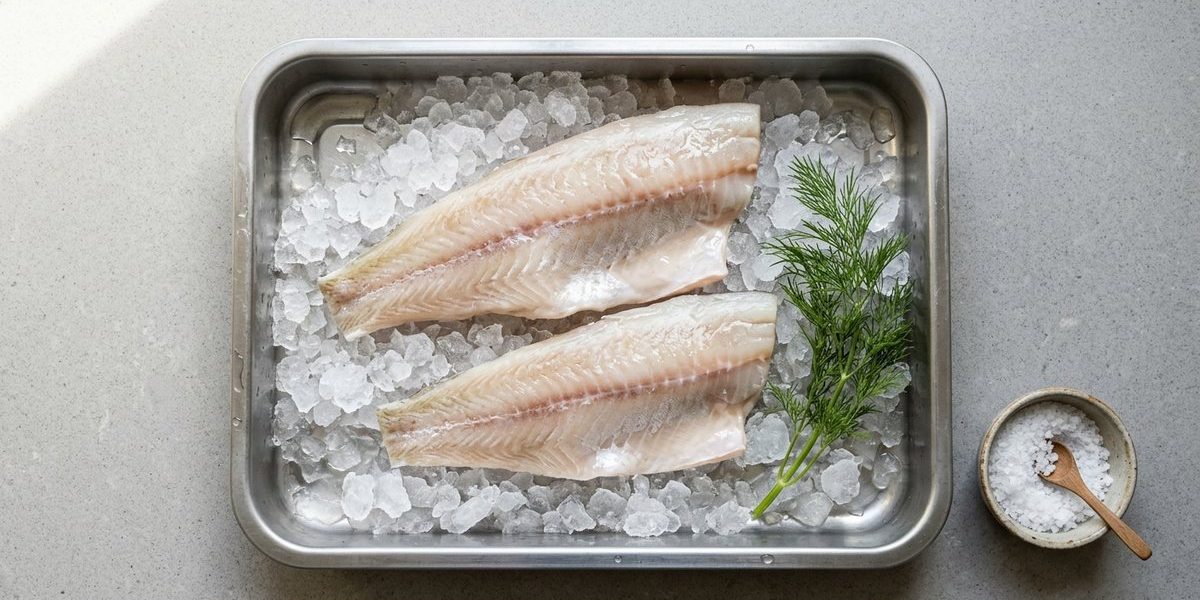
Searching for low histamine fish usually starts with a simple question: which fish can I eat? The honest answer is less simple. No species is reliably low in histamine the way an apple or a fresh carrot is, because the histamine in fish is mostly made after the catch, by bacteria, while the fish sits on a boat, in a truck, on a counter or in your fridge. That makes the history of the fish in front of you more important than its name.
This guide explains why fish is one of the riskiest protein groups for people with histamine intolerance, which types are better candidates to test and which are best avoided, and how buying, storing and cooking decide how much histamine ends up on your plate. On this site, fish is treated as a test food for the reintroduction stage, not a staple for the first weeks of an elimination diet. If you are still building your basic food list, our histamine intolerance food list is the better starting point.
Why Fish Is Different From Other Proteins
Histamine in food is produced when bacteria break down an amino acid called histidine. Those bacteria carry an enzyme, histidine decarboxylase, that strips a small chemical group from histidine and turns it into histamine. Every protein food contains some histidine, but certain fish carry unusually large amounts of it as a free amino acid in their muscle, ready for bacteria to convert.
The fish with the most free histidine are the ones linked to scombroid poisoning, a type of food poisoning caused by histamine and related amines in spoiled fish. The classic group includes tuna, mackerel, sardines, anchovies, herring, bonito and mahi mahi. A 2021 review of low-histamine diets in the journal Nutrients, Low-Histamine Diets: Is the Exclusion of Foods Justified by Their Histamine Content?, notes that diets commonly advise against mackerel, tuna, sardines and anchovy precisely because of their high free histidine content.
Two other features make fish harder than meat or poultry. First, the bacteria that make histamine can work quickly once fish warms up, so a few hours of poor temperature control can matter. Second, histamine is heat stable. Once it has formed, cooking, grilling, frying, canning or freezing does not remove it. The same Nutrients review points out that the heat treatment used to make canned fish does not reduce these amines. Freezing pauses histamine formation, but it cannot undo what was already there before the fish went into the freezer, and histamine can start forming again quickly once the fish thaws.
What Happens Between the Sea and Your Plate
Because histamine builds up after death, the time and temperature between catch and kitchen are the real levers. The US Food and Drug Administration takes this seriously enough that its Fish and Fishery Products Hazards and Controls Guidance devotes a whole chapter to scombrotoxin (histamine) formation. For species at risk, it recommends getting fish into ice or refrigerated seawater at 40°F (about 4°C) or below within a set number of hours after death, with a shorter window when the air or water is warm.
That guidance is written for processors, not shoppers, but it tells you something useful. Histamine control is decided largely on the boat and at the dock. A fish that was chilled fast, kept cold and processed quickly is likely to reach the counter with little histamine. A fish that sat warm on deck for a few hours may already carry a significant amount, even if it looks and smells perfect later.
From there, every additional step adds risk: thawing and refreezing, long display times, a slow trip home in a warm car, several days in a domestic fridge that runs warmer than it should. None of these steps is dramatic on its own. Stacked together, they help explain why one piece of salmon may be tolerated and the next one not.
Smell and appearance are not reliable tests. Fish can carry enough histamine to cause symptoms while looking, smelling and tasting normal. A bad smell tells you the fish is spoiled, but a good smell does not tell you it is low in histamine. Choose fish by how it was handled, not by how it seems on the counter.
How Our Ratings Treat Fish
The ratings below follow the house food list used across this site. They are deliberately cautious. Nothing in this table is rated Low, because the histamine in fish depends so heavily on handling that no species can be promised as safe in advance. Moderate (test) means a food worth trying during reintroduction, in a small portion, when you are otherwise stable. High means a food that is high in histamine or reported to release it, which most low-histamine diets leave out; on this site, High foods are avoided rather than tested early.
| Fish or product | House rating | Why |
|---|---|---|
| Cod, haddock, pollock and other white fish, very fresh or frozen at sea | Moderate (test) | Lower free histidine than scombroid fish, but still depends on handling |
| Salmon, very fresh or frozen at sea | Moderate (test) | Oily fish that can build histamine if storage slips |
| Trout, very fresh or frozen at sea | Moderate (test) | Similar to salmon; depends on handling |
| Tuna (fresh steaks or canned) | High | Scombroid species with high free histidine |
| Mackerel | High | Scombroid species with high free histidine |
| Sardines and anchovies | High | High free histidine; usually sold canned, salted or cured |
| Smoked fish (salmon, mackerel, kippers) | High | Processing and storage time allow histamine to build |
| Canned fish of any kind | High | Canning heat does not remove histamine already formed |
| Cured, salted, dried or pickled fish | High | Long processing and, often, fermentation |
| Fish sauce and anchovy paste | High | Fermented products |
| Shellfish (prawns, shrimp, mussels, crab) | High | Often listed as a possible histamine liberator (evidence is limited), and spoils quickly |
If you have read elsewhere that white fish is “low histamine”, that is not wrong so much as incomplete. Some people with histamine intolerance find they tolerate cod or haddock that was frozen soon after catch. The point of the Moderate (test) label is that you find out by testing, not by assuming.
Where Fish Fits in an Elimination Diet
Most low-histamine elimination phases last a few weeks and focus on foods with the most predictable histamine content: freshly cooked meat and poultry, fresh vegetables, most fresh fruit, rice, oats and fresh dairy. Fish is left out of that core list, not because every fish is high in histamine, but because it is hard to know which one is. Removing it makes the elimination phase cleaner and the results easier to read.
When symptoms have settled and you begin reintroducing foods, fish is one of the first proteins we suggest testing on this site, because it adds variety and omega-3 fats to a limited diet. A sensible order is to start with white fish that was frozen at sea, then move to salmon or trout if that goes well. Scombroid species, smoked fish and canned fish come much later, if at all. Our guide on how long to stay on a low histamine diet explains how the elimination and reintroduction stages usually fit together.
How to Test Fish Safely During Reintroduction
A fish test works best when it changes only one thing. Pick a day when you feel well, have had no other new foods and are not dealing with extra triggers such as a cold, poor sleep or a heavy week. Then follow a simple pattern:
- Choose one type of fish, frozen at sea, and cook it straight from frozen or after thawing in the fridge.
- Eat a small portion with foods you already know you tolerate, such as rice and steamed courgette.
- Note any symptoms over the rest of that day and the next, in the same diary you use for other tests.
- If there is no reaction, repeat with a normal portion on another day before calling it a success.
A single bad reaction does not prove that a species is off limits for good. It might reflect that particular piece of fish. A pattern of reactions across several well-handled portions is more meaningful. If you react strongly, with flushing or a racing heart, stop testing and talk to your doctor before trying again. Breathing trouble or throat swelling needs emergency help straight away (see the warning below).
Buying Fish With Histamine in Mind
The single most useful phrase to look for on a label is “frozen at sea”. Fish frozen on the boat, usually soon after catch, has had the least time for bacteria to work. It is frequently a better choice than fish sold chilled on a counter, which can have spent several days in transit and display before you see it. Some supermarkets label this clearly; others print the catch and freezing method in small type on the back of the pack.
If you buy from a fish counter, a few questions help:
- When did this fish come in, and was it previously frozen?
- Was it caught locally or flown in?
- Can you cut a portion from a whole fish rather than a fillet that has been sitting out?
Whole fish give you a few extra clues: clear, bulging eyes, bright red gills and firm flesh that springs back when pressed suggest the fish is not old. These signs are about general freshness, not histamine content, so treat them as a filter rather than a guarantee. For the same reason, avoid fish that has obviously been on display at room temperature, sitting in melted ice or stacked high above the ice line.
Plan the trip home too. Buy fish last, bring an insulated bag or a cool box with ice packs, and go straight home. On a warm day, a long detour with fish in the car undoes the work of a careful supply chain.
Storing Fish at Home
Once fish is in your kitchen, the rules are about cold and time. Your fridge should run at 4°C (40°F) or below; an inexpensive fridge thermometer is the only way to know. Put fish in the coldest part of the fridge, usually the bottom shelf at the back, in a sealed container so it does not drip onto other food.
For histamine purposes, the safest habit is to cook chilled fish on the day you buy it. If that is not possible, freeze it the same day rather than keeping it in the fridge for two or three days. Frozen-at-sea fish should go straight into your freezer without thawing on the way.
Thaw frozen fish in the fridge, on a plate, overnight or for several hours depending on thickness. Avoid thawing on the counter or in warm water, which allows the outer layer to warm while the middle is still frozen. Many thin fillets can also be cooked straight from frozen, which removes the thawing step entirely. Once thawed, cook the fish promptly and do not refreeze it raw.
Quick storage rules for fish: fridge at 4°C (40°F) or below; cook the same day or freeze the same day; thaw in the fridge or cook from frozen; refrigerate or freeze cooked leftovers within 2 hours, or within 1 hour above 32°C (90°F); reheat once, to 74°C (165°F).
Cooking Fish for Histamine Intolerance
Cooking cannot lower histamine that is already in the fish, so the goal of cooking is different here. It is about speed and safety: getting the fish from fridge or freezer to plate quickly, and cooking it properly so it is safe to eat.
Fish should reach an internal temperature of 63°C (145°F), or flake easily with a fork and look opaque all the way through. A probe thermometer takes the guesswork out of thicker fillets. Fast methods suit fish well because they keep the kitchen time short: pan frying, baking in a hot oven, steaming, poaching and air frying all cook a typical fillet in 10 to 20 minutes. If you use an air fryer, our low histamine air fryer recipes include timings for other proteins you can adapt.
Season simply. Lemon, lime, vinegar, soy sauce and most bottled marinades are poor matches for a low-histamine diet, so lean on olive oil, butter, salt, fresh herbs such as dill, parsley and chives, garlic and a little fresh ginger. Our guide to hidden histamine in food covers the sauces and seasonings that most often sneak extra histamine into a plain meal.
Three Simple Ways to Cook a Test Portion
When you are testing fish, a plain recipe makes it easier to tell whether the fish itself is the problem. These three ideas use ingredients most low-histamine diets already include.
Baked Cod With Herb Butter
Heat the oven to 200°C (400°F). Place a cod fillet, thawed in the fridge or straight from frozen, on a lined tray. Mix a tablespoon of soft butter with chopped parsley, chives and a pinch of salt, spread it over the fish and bake for 12 to 18 minutes, until the thickest part reaches 63°C. Serve with plain rice and steamed green beans.
Pan Fried Salmon With Courgette
Pat a salmon fillet dry and season with salt. Heat a little olive oil in a pan over medium high heat and cook skin side down for about 4 minutes, then turn and cook for 2 to 4 minutes more, until the thickest part reaches 63°C (145°F). In the same pan, briefly sauté ribbons of courgette with garlic. Eat straight away rather than saving half for tomorrow’s lunch.
Steamed Haddock Parcels
Lay a haddock fillet on a sheet of baking paper with thin slices of carrot, a few sprigs of dill and a small knob of butter. Fold into a parcel and bake or steam for 12 to 15 minutes, until the fish reaches 63°C (145°F) and flakes easily. The parcel keeps the fish moist without any sauce and makes portion control easy when you are testing.
Leftovers and Meal Prep With Fish
Cooked fish is one of the least forgiving leftovers on a low-histamine diet. Cooked fish can pick up new bacteria after cooking, and histamine can form again if it is kept warm or stored too long; reheating will not remove it. If you cook more than you will eat, cool the extra quickly, then freeze it in single portions within two hours of cooking. Reheat only once, until piping hot all the way through, which means reaching 74°C (165°F).
For meal prep, it often works better to freeze raw portions of fish that was frozen at sea, then cook each portion on the day you eat it. A fillet cooked from frozen takes a little longer than a thawed one, so check it reaches 63°C. Our low histamine meal prep guide explains the freeze-first approach for other foods as well.
Eating Fish in Restaurants
Restaurant fish is the hardest version of this food to judge, because you cannot see how it was stored or how long it waited before cooking. If fish is one of your tolerated test foods, a few habits lower the odds of a bad reaction:
- Choose places with high turnover, where fish is likely to be used quickly.
- Ask whether the fish was delivered today or frozen, and how it is prepared.
- Prefer simply grilled white fish or salmon over tuna steaks, fish stews, seafood platters or anything marinated.
- Skip fish sauces, anchovy dressings, tartare sauce and anything with vinegar or soy.
Sushi and raw fish dishes add an extra layer of uncertainty, since they often use tuna and mackerel and are served with soy sauce and pickled ginger. Our printable low histamine restaurant card can make these conversations with staff easier.
Scombroid Poisoning and How It Differs From Intolerance
Scombroid poisoning happens when anyone, with or without histamine intolerance, eats fish that contains a large amount of histamine. According to the FDA’s page on scombrotoxin poisoning and decomposition, symptoms usually start within minutes to about 2 hours of eating, and the toxins are not destroyed by freezing, cooking, smoking, curing or canning. Symptoms can include flushing of the face and upper body, a peppery taste, or tingling or burning in the mouth, headache, a rash or hives, itching, sweating, a racing heart, dizziness, nausea, vomiting, cramps and diarrhoea, and, in severe cases, low blood pressure or breathing difficulty. Several people who ate the same fish may become ill at once, which is a useful clue.
Histamine intolerance is different. It is a reduced ability to break down normal amounts of histamine from food, so symptoms can follow amounts most people tolerate, and may build up over several high-histamine meals. A person with histamine intolerance may react to a portion of fish that other people at the table eat without trouble. In practice, the line between a mild scombroid reaction and an intolerance flare can be blurry, which is another reason fish is treated so carefully on this site.
Scombroid poisoning can be mistaken for an allergic reaction to fish. A true fish allergy is a different condition, driven by the immune system’s response to fish proteins, and it calls for strict avoidance and a medical plan. If you are not sure which one you are dealing with, an allergist can help sort it out.
When to See a Doctor
Most scombroid reactions are short-lived, but some are severe, and the early signs of a serious allergic reaction can look similar. Get medical help if symptoms after eating fish are strong or getting worse, if you have a heart condition or asthma, or if you are pregnant.
Call emergency services straight away if a reaction includes swelling of the lips, tongue or throat, difficulty breathing or swallowing, wheezing, a hoarse voice, dizziness or fainting, or a sudden drop in blood pressure. These can be signs of anaphylaxis. Adrenaline (epinephrine) comes first; antihistamines are not a substitute. If you have been prescribed an adrenaline auto-injector, use it and call for help.
See your doctor or pharmacist before relying on fish-avoidance advice alone if you take regular medicines, since some drugs can reduce the activity of DAO, the main enzyme that breaks down histamine in the gut. Never stop or change a prescribed medicine on your own. Our guide to medications that block DAO lists the ones most often discussed.
Fish During Pregnancy
Pregnancy adds its own fish rules on top of histamine considerations. The NHS guidance on foods to avoid in pregnancy says to avoid shark, swordfish and marlin, to eat no more than 2 portions a week of oily fish such as salmon, trout, mackerel and sardines, and to eat cold-smoked or cured fish such as smoked salmon only if it has been cooked until steaming hot. Cooked fish is listed as safe to eat.
Those rules sit comfortably alongside a cautious histamine approach, since smoked fish and scombroid species are already rated High here. If you are pregnant and managing histamine symptoms, talk to your midwife or doctor before cutting out whole food groups. Our article on histamine intolerance and pregnancy explains why symptoms can change during those months.
Getting Omega-3 Fats Without Relying on Fish
One reason people want to keep fish in their diet is omega-3 fats. If fish turns out to be a reliable trigger for you, there are other routes. Algae-based omega-3 supplements provide the same long-chain fats that fish get from their own diet, and seeds such as flax, chia and hemp, all rated Low on the house list, provide a shorter-chain omega-3 the body converts only partly. Our guide to omega-3 for histamine intolerance compares these options and the evidence behind them. Check any supplement with a pharmacist if you take blood thinners or other regular medicines.
Putting It Together
Low histamine fish is less a list of species than a set of habits. Start with white fish that was frozen at sea, test it in a small portion during reintroduction, and cook it the same day it thaws. Keep tuna, mackerel, sardines, anchovies, smoked, canned and cured fish out of the picture unless you have a very good reason to test them later. Shop with a cool bag, keep your fridge cold and freeze leftovers fast. Handled this way, fish can become a tolerated part of the diet for some people, and the occasional bad portion becomes easier to recognise for what it is.
If you are not sure where fish fits among your other foods, the high histamine foods to avoid list shows the wider picture of what usually stays off the plate during elimination.
Your questions about fish and histamine
Is there any fish that is truly low in histamine?
No species is reliably low in histamine, because most of the histamine in fish forms after the catch. White fish such as cod and haddock that was frozen at sea is usually the best first test, but it is rated Moderate (test), not Low.
Does cooking or freezing remove histamine from fish?
No. Histamine is heat stable, so cooking, canning or grilling does not remove it. Freezing pauses histamine formation but does not remove what was already there, and histamine can start forming again once the fish thaws.
Is canned tuna or salmon safe on a low histamine diet?
Canned fish is rated High. Canning heat does not lower histamine that formed before processing, and tuna and sardines are high in free histidine, the raw material for histamine.
Is frozen fish better than chilled fish from the counter?
Fish labelled frozen at sea is often the better choice, because it is usually frozen soon after catch. Counter fish may have spent several days in transit and display before you buy it.
Can I tell if fish is high in histamine by smelling it?
No. Fish can carry enough histamine to cause symptoms while looking, smelling and tasting normal. A bad smell signals spoilage, but a good smell is not proof of low histamine.
When should I try fish again after a reaction?
A single reaction may reflect one poorly handled portion. Wait until you feel well, then retest with a small portion of white fish frozen at sea. If reactions are strong or keep happening, talk to your doctor before testing again.
Medical disclaimer: This content is for informational purposes only and does not constitute medical advice. Always consult a qualified healthcare provider before starting any supplement regimen.
→ Try the Histamine Load Calculator — find out if your daily food choices are pushing you over your histamine threshold.
→ Track your reactions with the Histamine Food Diary — identify your personal trigger foods automatically.
→ Ready to start? Use the 4-Week Elimination Diet Planner — interactive daily tasks with progress tracking.
→ Build your meal with the Low Histamine Meal Builder — instant histamine scoring as you select ingredients.