
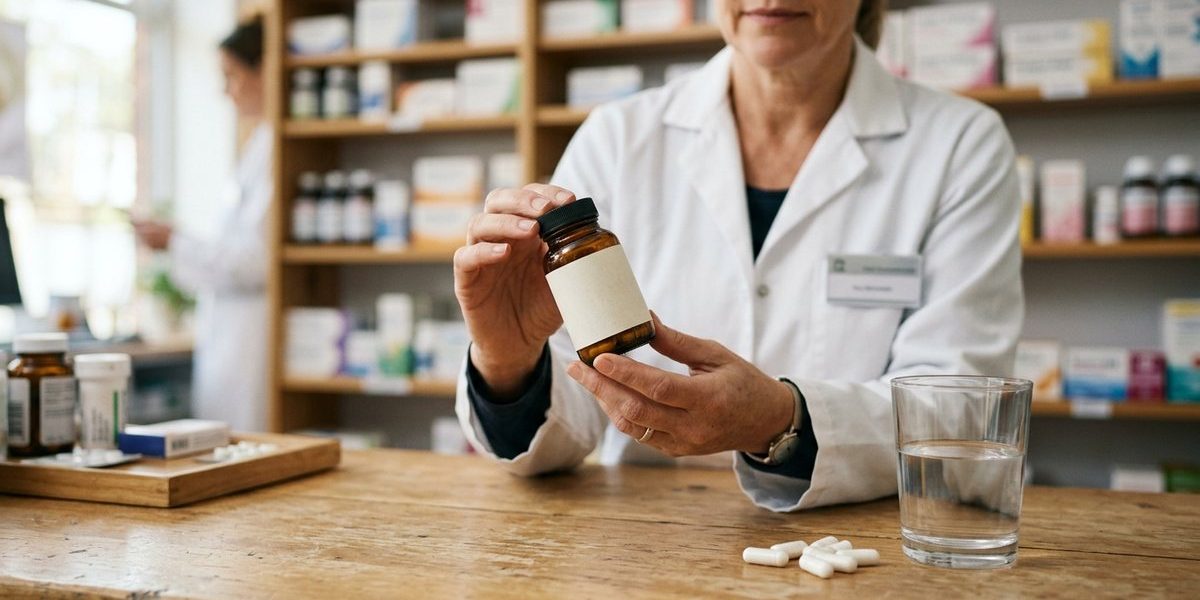
If you are thinking about trying a diamine oxidase supplement, the question of DAO enzyme side effects usually comes up right after “does it work?” It is a fair question. These products are sold freely online and in pharmacies, they are often taken regularly, and some people use them for long periods. Yet much of what you read about their safety comes from product pages or forums rather than from studies. This guide pulls together what the published studies actually report, why that evidence is thinner than it sounds, and which groups of people have good reason to check with a doctor or pharmacist before they start.
The honest summary is this: in the small clinical studies available, DAO supplements have not been linked to notable side effects. That is reassuring, but it is not the same thing as being proven safe for everyone, at any stage of life, for years at a time. The gaps matter most for people who are pregnant, for children, for anyone who avoids pork, and for anyone whose symptoms have never been properly investigated.
The Short Answer on DAO Enzyme Side Effects
Across the trials we could verify, researchers recorded no serious adverse events linked to DAO supplements, and in some studies no adverse events at all in the people taking the enzyme. That covers a few dozen healthy volunteers given single doses, around a hundred migraine patients followed for one month, and 28 people with suspected histamine intolerance followed for four weeks.
What those studies cannot tell you is just as important:
- whether rare reactions exist, because rare effects only show up when thousands of people are studied
- what happens with daily use over many months or years
- how the enzyme behaves in pregnancy, while breastfeeding or in children
- how it interacts with specific medicines, which has not been studied in people in any systematic way
- whether the many different products on the market behave the same way as the specific ingredient used in a trial
So the best way to read the evidence is “well tolerated in short, small studies, with long-term and special-population data missing.”
What Is Actually Inside a DAO Supplement
Diamine oxidase is the enzyme your gut lining uses to break down histamine from food before it reaches the bloodstream. It is a copper-containing amine oxidase, and the parts it needs to work are copper and a built-in component called TPQ. Supplements try to add extra enzyme to the digestive tract, where food histamine arrives. Our guide on dao enzyme supplement basics covers how that is meant to work in more detail.
Commercial products get their enzyme from one of two broad sources:
- Pig kidney extract. This is the traditional and most studied source. In the European Union, a protein extract from pig kidneys is regulated as an authorised novel food, and the conditions for its use have been updated over the years.
- Plant sources. Some newer products use DAO taken from legume sprouts, most often pea sprouts. These are marketed to people who avoid pork, but they have less published research behind them.
The enzyme is only part of the capsule. Products also contain fillers, coatings, capsule shells, anti-caking agents and sometimes colourings or flavourings. For a person who reacts easily to food additives, those extra ingredients are another possible cause of reactions, separate from the enzyme itself, a point that comes up again below.
What the Clinical Studies Report About Safety
Only a handful of human studies have looked at DAO supplements, and none of them was designed mainly to find side effects in people with histamine intolerance. Here is what the three studies we checked directly say about tolerability.
| Study | Who took part | Design | What was reported on side effects | Strength of evidence |
|---|---|---|---|---|
| Molina Perelló and colleagues, 2024 (preprint) | 30 healthy adult volunteers | Randomised, double-blind, placebo-controlled, single ascending doses of a vegan DAO extract (sold as adiDAO Veg) | No serious adverse events, no discontinuations, no clinically significant changes in vital signs, heart tracings or blood tests | Phase I safety study, single doses only, not yet peer reviewed |
| Izquierdo-Casas and colleagues, 2019 | 100 adults with episodic migraine and low measured DAO | Randomised, double-blind, placebo-controlled, one month | No adverse events recorded in the DAO group; placebo group also improved, with no significant difference between groups | Randomised controlled trial, short duration, one patient group |
| Schnedl and colleagues, 2019 | 28 adults with suspected histamine intolerance | Open label, no control group, four weeks of DAO then four weeks without | No adverse events described | Small pilot study, placebo effect cannot be ruled out |
The most direct safety data comes from a 2024 phase I trial in healthy volunteers. Thirty people received either a vegan DAO extract or a placebo, with three escalating single amounts, including amounts the authors describe as well above what is typically recommended. Everyone completed the study, and the investigators reported no serious adverse events and no meaningful changes in heart rhythm, blood pressure or laboratory results. You can read the abstract of this phase I trial of single ascending DAO doses in healthy volunteers. Two caveats apply: it is a preprint that has not yet been through peer review, and one of the author affiliations is a company that develops DAO ingredients, although the authors declared no competing interests.
The largest controlled trial in patients enrolled 100 people with episodic migraine whose blood DAO activity was low. Participants were randomly assigned to a DAO supplement or a placebo for one month. Pain hours fell modestly in the DAO group compared with before treatment, but the placebo group also improved and the difference between the groups was not statistically significant, so the evidence of benefit is limited. On safety, the researchers recorded no adverse effects in people taking the enzyme. The study record is available through the University of Barcelona repository as the randomised double-blind DAO trial in episodic migraine. One month is a short window, and migraine patients are only one slice of the people who buy these products.
A smaller open-label pilot followed 28 people with suspected histamine intolerance for four weeks on DAO and four weeks off it. Symptoms improved while they were taking it, and the published report does not describe any adverse events. Because there was no placebo group, the authors themselves note that a placebo effect cannot be excluded. The details are in the 2019 pilot study of DAO supplementation in histamine intolerance.
Why “No Side Effects Reported” Does Not Mean “Proven Safe”
It is tempting to read a column of “none reported” and conclude that DAO is harmless. That conclusion goes further than the data can. A few structural reasons explain why.
The numbers are small. Put the three studies together and you have well under two hundred people who took DAO under observation. A side effect that affects one person in five hundred would very likely be missed entirely. Medicines are typically tested in thousands of people before approval for exactly this reason.
The follow-up is short. Single doses and four-week courses tell you very little about what happens with daily use over a year, which is how many people actually use these products.
The products differ. Each trial used one specific ingredient. Shop shelves carry many brands, with different enzyme sources, different amounts, different coatings and different fillers. Results from one product do not automatically transfer to another.
Supplements are not regulated like medicines. In most countries, a food supplement does not need to show safety and effectiveness in clinical trials before it is sold, although some ingredients, such as the EU-authorised pig kidney extract, go through a novel-food safety assessment. Quality control, contamination testing and label accuracy depend heavily on the manufacturer. Our comparison of best dao enzyme supplements explains what to look for on a label.
Side effects may not be looked for carefully. In trials focused on symptoms such as migraine, adverse events are recorded, but the study is not built to detect subtle or delayed problems.
None of this suggests DAO is dangerous. It simply means the evidence supports “well tolerated in the short term in the people studied” and nothing stronger.
Reactions People Describe and What Might Be Behind Them
Outside of trials, you will find people saying a DAO product gave them stomach discomfort, a headache, a rash or a general sense of feeling worse. Those accounts are not evidence that the enzyme caused the problem, and we will not repeat or tally anecdotes here. They are still worth taking seriously as a reason to look at the likely causes, because several explanations are more plausible than a reaction to the enzyme itself.
- Excipients and additives. Fillers, flavourings, colourings, citric acid and capsule materials vary between brands. People who react to additives in food may react to the same additives in a capsule.
- The source protein. Pig-derived products contain pork protein, and plant-derived products contain legume protein. Someone with an allergy to either could, in principle, react.
- Coincidence with other triggers. A person who starts DAO and relaxes their diet at the same time may simply be eating more histamine than the supplement can cover, which looks like the product “causing” symptoms.
- A different condition. If symptoms are driven by something other than food histamine, a DAO supplement will not help, and the ongoing symptoms can be blamed on the product.
If you notice a new symptom after starting any supplement, stop the self-chosen supplement and talk to a pharmacist or doctor rather than switching between brands to see what happens. Keep the packaging so you can show exactly what you took. This applies only to products you chose yourself, never to anything a doctor prescribed.
The Pork Question
Because the classic DAO ingredient comes from pig kidneys, it is not suitable for everyone. Three groups should pay attention to the source before buying.
People with a pork allergy. A true pork allergy is uncommon, but anyone who has had a reaction to pork should not try a porcine DAO product without speaking to an allergist first.
People with alpha-gal syndrome. This tick-related allergy causes reactions to mammalian meat and, in some people, to other products made from mammals. Whether a pig kidney extract would trigger a reaction has not been studied, and pig kidney is among the foods known to provoke reactions in alpha-gal syndrome, so anyone with this diagnosis should treat porcine DAO as a question for their allergist, not an experiment to run alone.
People who avoid pork for religious, ethical or dietary reasons. Labels do not always make the source obvious on the front. Check the ingredient list for wording such as “porcine kidney extract” or “protein extract from pig kidneys”.
Plant-based DAO from pea sprouts is the usual alternative. It removes the pork issue but adds a legume protein, which matters for anyone with a pea or legume allergy. It also has less clinical research behind it, so “plant-based” should not be read as “safer” or “better studied”. The 2024 safety trial described above used a vegan DAO extract, which is a useful starting point, but it was a single-dose study in healthy volunteers.
Reading the source on a label. Look for the enzyme source in the ingredient list rather than the front of the pack. Porcine products usually name pig kidney or porcine kidney. Plant products usually name pea sprouts or a legume extract. If the source is not stated at all, ask the manufacturer before buying.
Pregnancy, Breastfeeding and Children
These are the groups where the gaps in the evidence are widest.
Pregnancy. The placenta produces large amounts of DAO, and blood DAO activity rises dramatically during a normal pregnancy. This is thought to be one of the body’s own ways of protecting the pregnancy from excess histamine, and it may be one reason some people report that their histamine symptoms ease while pregnant. Supplement safety in pregnancy has not been studied, so there is no evidence base to say a DAO product is safe at this time. Speak to your midwife, obstetrician or pharmacist before taking one. Our article on histamine intolerance pregnancy changes covers this further.
Breastfeeding. There is no published research on DAO supplements during breastfeeding. Treat it the same way as pregnancy and ask a healthcare professional first.
Children. DAO supplements have barely been studied in children, so there is no evidence-based guidance on whether they are appropriate or how they should be used. Children with suspected food-related symptoms need a proper assessment, because allergy, coeliac disease and other conditions are more urgent to rule out than histamine intolerance. Our guide to histamine intolerance in children explains why paediatric specialists are cautious about this label.
Medicines, DAO Activity and Interactions
Two separate questions often get mixed together here.
The first is whether some medicines reduce the body’s own DAO activity. Laboratory studies suggest that a number of common drugs can inhibit DAO, which is thought to be one possible reason some people notice histamine-type symptoms while taking certain medicines. Our guide to medications that block dao lists the medicines most often mentioned. The key rule is simple: never stop or reduce a prescribed medicine on your own because you suspect it affects DAO. Bring the question to the doctor who prescribed it, who can weigh the benefits and look for alternatives if needed.
The second question is whether a DAO supplement interacts with medicines. There are no well-documented interactions in people, but that mainly reflects the fact that nobody has studied combinations systematically. Absence of a known interaction is not proof that none exists. For that reason it is sensible to tell your pharmacist or doctor about a DAO supplement in the same way you would mention any other product, especially if you take regular medicines for heart conditions, blood pressure, mood, pain or infections, or if you also use antihistamines.
Drug interaction note. No human studies have tested DAO supplements alongside specific medicines. Some medicines may lower your own DAO activity, but that is a reason to talk to your prescriber, not to stop treatment. Tell your pharmacist about every supplement you take, including DAO, so they can check your full list.
The Bigger Risk Is Masking Something Else
For most people, the more realistic risk of DAO supplements is not a direct side effect. It is using them to quiet symptoms that actually come from a different problem.
The symptoms people associate with histamine intolerance, such as bloating, diarrhoea, headaches, flushing, itching and a racing heart, overlap with a long list of other conditions. Coeliac disease, inflammatory bowel disease, true food allergies, mast cell disorders, thyroid problems and side effects of medicines can all look similar. If a supplement takes the edge off symptoms, it can delay the tests that would find a condition needing specific treatment.
Testing has its own limits. A DAO blood test is not validated for routine diagnosis, and a low result does not confirm histamine intolerance on its own. Our explainer on low dao levels covers what these results can and cannot tell you. In practice, histamine intolerance is usually identified by ruling out other causes and then seeing how symptoms respond to a structured diet change, ideally with a clinician or dietitian involved. Our comparison of antihistamine vs dao vs elimination diet approaches explains how these options fit together.
DAO Is Not an Emergency Treatment
This point deserves its own section because the consequences of getting it wrong are serious. DAO supplements are designed to help break down histamine from food in the gut. They do not treat or prevent allergic reactions or anaphylaxis, and they are not a substitute for an adrenaline (epinephrine) auto-injector for anyone who has been prescribed one.
Call emergency services immediately if a reaction includes swelling of the lips, tongue or throat, difficulty breathing or wheezing, a hoarse voice, feeling faint, collapse, or widespread hives with vomiting. These can be signs of anaphylaxis. Adrenaline (epinephrine) is the first treatment. Antihistamines and supplements are not a substitute, and you should never wait to see whether a DAO capsule helps.
If you carry an auto-injector, keep carrying it whatever supplements you take. If you have had a severe reaction to a food in the past, that reaction needs an allergy assessment, not a histamine intolerance plan.
Reading a Label With Safety in Mind
You cannot judge a supplement’s safety from its marketing, but the label can still tell you a lot. When comparing products, check:
- The enzyme source, porcine or plant, stated clearly in the ingredients
- The full list of other ingredients, including fillers, capsule material, colourings, flavourings and acidifiers
- Allergen statements, especially for pork, legumes, gluten, dairy and soy
- Third-party testing or quality certifications that confirm what is in the product
- A named manufacturer with contact details, so you can ask questions about sourcing
- Health claims that sound too strong, such as promises to cure histamine intolerance or let you “eat anything”, which no study supports
A product that is vague about its source or its other ingredients is harder to evaluate, and that uncertainty matters more if you react to many things.
Questions to Ask a Pharmacist Before You Start
A short conversation with a pharmacist is often free and covers most of the safety ground. Useful questions include:
- Could this product affect, or be affected by, any of the medicines I take?
- Is this product suitable if I am pregnant, trying to conceive or breastfeeding?
- Does it contain any ingredient I am allergic to or avoid, including pork or legumes?
- Are my symptoms something that should be checked by a doctor before I try a supplement?
- What should I do if I notice a new symptom after starting it?
Bring the actual product or a photo of the ingredient list. Pharmacists can give much better advice when they can see exactly what is in the capsule.
When to See a Doctor
See a doctor before relying on a DAO supplement if: you have never had your symptoms assessed; you have weight loss, blood in your stool, persistent diarrhoea, vomiting or night sweats; you have ongoing bloating and you are a woman over 50; you have chest pain, fainting or a very fast heartbeat; you are pregnant or breastfeeding; you want to use DAO for a child; or you take regular prescribed medicines. Seek urgent help for any sign of anaphylaxis, and do not stop or change prescribed medicines without talking to the prescriber.
What people ask about DAO safety
Are DAO enzyme side effects common?
In the small clinical studies available, side effects were rare or not reported at all, and no serious adverse events were linked to DAO. Those studies were short and involved fewer than two hundred people in total, so rare or long-term effects cannot be ruled out.
Can a DAO supplement make histamine symptoms worse?
There is no evidence that the enzyme itself raises histamine. If symptoms worsen, more likely explanations include a reaction to fillers or additives, an allergy to the pork or legume source, eating more high-histamine food at the same time, or a different condition causing the symptoms. Stop a self-chosen supplement and ask a pharmacist or doctor.
Is plant-based DAO safer than pork-based DAO?
Not necessarily. Plant-based DAO avoids pork protein but contains legume protein, and it has less published research behind it. The better choice depends on your allergies and dietary needs, which is worth discussing with a pharmacist.
Can I take DAO while pregnant or breastfeeding?
DAO supplements have not been studied in pregnancy or breastfeeding. The placenta already produces large amounts of DAO during pregnancy. Speak to your midwife, doctor or pharmacist before taking any DAO product during this time.
Does DAO interact with medicines?
No interactions have been documented in people, but combinations have not been studied. Some medicines may lower your own DAO activity, which is a reason to talk to your prescriber rather than stop treatment. Tell your pharmacist about any DAO supplement you take.
Medical disclaimer: This content is for informational purposes only and does not constitute medical advice. Always consult a qualified healthcare provider before starting any supplement regimen.
→ Find your personal dose with the DAO Supplement Dose Calculator — personalised dosing based on your symptoms and lifestyle.
→ Build your personalised protocol with the Supplement Stack Builder — select your symptoms, get specific doses and timing.