
Gallbladder surgery is supposed to end the pain. For many people it does. But a noticeable number of people report a frustrating new chapter in the months afterward: loose stools after meals, bloating, nausea, and reactions that look a lot like histamine intolerance. Wine or aged cheese suddenly cause flushing and headaches. Itching, hives or palpitations appear after meals. If you are searching for answers about histamine intolerance after gallbladder removal, you are not imagining a link, even though research on this exact combination is limited.
This guide looks at how problems with histamine after gallbladder removal can develop, how bile acid diarrhea and bacterial overgrowth fit into the picture, how to tell histamine reactions from bile-related symptoms, and what practical steps can help.
Check for surgical complications first. Yellowing of the skin or eyes, dark urine, pale stools, fever, chills or severe pain in the upper abdomen after gallbladder surgery can signal a retained stone, a bile leak or an infection. These need prompt medical assessment, not a diet change.
What the Gallbladder Actually Does
Your liver makes bile continuously. The gallbladder stores and concentrates it between meals, then squeezes a concentrated dose into the small intestine when you eat, particularly when a meal contains fat. Bile acids help digest and absorb fat and fat-soluble vitamins. They also have antimicrobial effects that help keep bacterial numbers in check in the small intestine. Most bile acids are reabsorbed at the end of the small intestine and recycled back to the liver.
After the gallbladder is removed, bile still flows, but it trickles into the intestine continuously rather than arriving in timed, concentrated doses. Most people adapt well. In some, this change sets off a chain of effects that can affect the gut lining, the bacteria living there and, indirectly, how well histamine is handled.
Bile Acid Diarrhea and the Gut Lining
When more bile acids reach the colon than it is used to, they draw water into the bowel and speed up transit, causing urgent, watery or loose stools, often soon after meals. This is called bile acid diarrhea or bile acid malabsorption.
A 2023 review in the World Journal of Gastrointestinal Surgery, Diagnosis and treatment of post-cholecystectomy diarrhoea, notes that diarrhea after gallbladder removal is common, with one US estimate of 5 to 12 percent of patients and much higher rates in some studies, and that bile acid diarrhea is frequently misdiagnosed as irritable bowel syndrome.
Why does this matter for histamine? DAO, the main enzyme that breaks down histamine from food, is produced by the cells lining the small intestine. Anything that irritates or inflames the gut lining or speeds food through too quickly can reduce how much histamine is cleared before it is absorbed. Ongoing diarrhea also disrupts the microbiome. Both effects can lower your histamine threshold.
Bile acid diarrhea is treatable, usually with bile acid binders prescribed by a doctor, and treating it often calms other symptoms too. If loose stools after meals are a big part of your picture, ask your doctor whether this could be the cause.
Bacterial Overgrowth After Gallbladder Removal
Because bile acids help control bacteria in the small intestine, researchers have asked whether losing the gallbladder changes the risk of small intestinal bacterial overgrowth (SIBO). The answer so far is mixed.
A 2015 Korean study published in the Journal of Neurogastroenterology and Motility found that SIBO was diagnosed in 46.8 percent of post-cholecystectomy patients with upper digestive symptoms, compared with 26.2 percent of people with functional gut disorders and 13.3 percent of healthy controls. The authors suggested SIBO may be an important cause of ongoing symptoms after gallbladder removal.
A US chart review reported the opposite pattern, finding lower rates of positive breath tests in people who had had their gallbladder removed. The researchers suggested that continuous bile flow might actually suppress bacterial growth in some people.
The honest summary is that gallbladder removal does not automatically cause SIBO, but SIBO is common enough in people with ongoing symptoms after surgery that it is worth testing for. This matters because SIBO is one of the best documented contributors to histamine problems: overgrowing bacteria can produce histamine, and inflammation in the small intestine reduces DAO. Our guide to sibo histamine intolerance explains that relationship in detail.
The Sulfur and Bile Connection
Some gut bacteria, such as Bilophila wadsworthia, thrive on taurine released from bile acids and produce hydrogen sulfide gas. Diets very high in saturated fat stimulate more bile, which can feed these bacteria. In people whose bile now flows continuously, this is one more way the gut environment can change. Hydrogen sulfide in excess irritates the gut lining, and people with this pattern often describe rotten egg smelling gas, urgent loose stools and reactions to sulfur-rich foods and supplements. Research directly linking this to gallbladder removal is limited, but it is a reason to mention sulfur-smelling gas to your doctor if you have it.
The Surgery Itself Can Play a Part
Symptoms that begin in the weeks right after the operation may have more to do with the surgery than the missing gallbladder. Antibiotics given around surgery can disrupt gut bacteria, and some antibiotics and other medicines reduce DAO activity. Opioid pain relief slows the gut and can cause constipation. Anesthesia, tissue healing and the stress of surgery all activate the immune system. Our article on histamine intolerance after antibiotics covers the antibiotic side in detail.
Symptoms driven mainly by the surgery often settle over weeks. Symptoms that persist or begin months later point more toward bile acid changes, SIBO or another ongoing process.
Gallbladder Problems and Mast Cells
There is another angle that patients with mast cell activation syndrome sometimes raise. People with MCAS often report gallbladder pain, biliary dyskinesia and digestive symptoms, and some go on to have their gallbladder removed without much improvement. Histamine influences smooth muscle contraction, including in the bile ducts, and mast cells are present throughout the digestive tract. It is possible that in some people, the gallbladder symptoms and the histamine symptoms share a common driver rather than one causing the other. This has not been well studied, but if you had widespread reactions before surgery as well, mast cell activation is worth discussing with your doctor. Our mast cell activation syndrome overview describes the typical pattern.
Who Is More Likely to Notice Problems
Most people who have their gallbladder removed never develop histamine symptoms. Based on the mechanisms above, a few groups seem more likely to notice them:
- People who already had histamine intolerance, food sensitivities or mast cell symptoms before surgery.
- People who develop ongoing diarrhea or urgency after the operation.
- People with pre-existing IBS, slow motility or a history of SIBO.
- People who needed several antibiotic courses around the time of surgery.
- Women going through hormonal shifts such as perimenopause, which can lower histamine tolerance independently. Our article on perimenopause histamine intolerance covers this overlap.
Knowing which of these apply to you helps focus investigations on the most likely drivers.
Histamine Symptoms or Bile Symptoms?
The two overlap, but some differences can help you and your doctor sort them out.
| More typical of bile-related problems | More typical of histamine reactions |
|---|---|
| Urgent, watery stools soon after meals | Flushing, itching or hives after meals |
| Symptoms worse after fatty meals | Symptoms worse after aged, fermented or leftover foods |
| Yellow or greasy stools | Headaches, nasal congestion, palpitations |
| Improves with bile acid binders | Improves with antihistamines or DAO |
| Mainly digestive symptoms | Symptoms in several body systems at once |
Many people have some of both. A food and symptom diary over a few weeks, noting fat content, histamine content and timing, is often the quickest way to see which pattern dominates.
What Helps With Histamine After Gallbladder Removal
Eat smaller, more frequent meals. Without a gallbladder, bile arrives in a steady trickle. Smaller meals spread through the day are easier to digest than large meals and reduce both bile-related symptoms and the histamine load per meal.
Moderate fat per meal rather than cutting it out. You still need fat and fat-soluble vitamins. Spreading fat across meals and favoring olive oil over large amounts of saturated fat is generally easier on the gut than very rich meals.
Lower your histamine load for a few weeks. A short low histamine phase, cutting back on aged cheese, cured meats, wine, fermented foods, canned fish and leftovers, can show quickly whether histamine is part of the problem. Our high histamine foods list shows where to start.
Add fiber gradually. Soluble fiber can help firm up loose stools and feeds beneficial gut bacteria. Oats, cooked and cooled rice or potatoes, and gentle fiber supplements such as acacia are good starting points. Increase slowly to avoid bloating.
Ask about bile acid binders. If bile acid diarrhea is suspected, your doctor may prescribe a binder. These can be very effective but can also cause constipation, and they can interfere with the absorption of other medicines and fat-soluble vitamins, so timing needs advice from your doctor or pharmacist.
Be careful with ox bile and digestive supplements. Some people take ox bile or enzyme blends after gallbladder removal. They help some people digest fat but worsen diarrhea in others, especially those with bile acid diarrhea. Introduce them one at a time, with your practitioner’s input.
Consider short-term symptom support. Antihistamines and a DAO supplement before meals can reduce histamine reactions while you work on the underlying cause. Our dao enzyme supplement guide explains how to use DAO.
A Gentle Day of Eating to Start With
When both bile changes and histamine reactions are in play, a simple, repeatable eating pattern for a few weeks makes it much easier to see what is going on. This is an example, not a prescription, and portions should suit your appetite and energy needs:
- Breakfast: porridge made with oats and water or a tolerated milk, topped with blueberries and a teaspoon of ground flaxseed.
- Mid-morning: a fresh pear or apple and a few rice cakes.
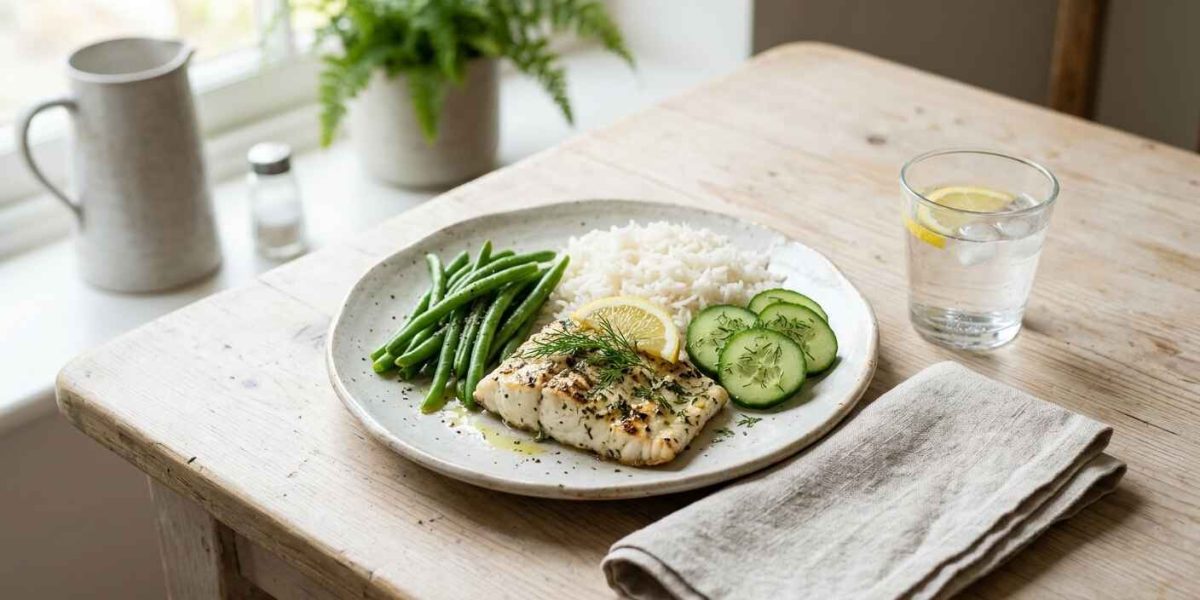
- Lunch: freshly cooked chicken or white fish frozen at sea with rice and steamed carrots or zucchini, dressed with a small drizzle of olive oil.
- Afternoon: plain crackers with a little fresh cream cheese, or a small bowl of cooked and cooled potato.
- Dinner: a small portion of freshly cooked meat, quinoa or sweet potato and green beans.
The common threads are small portions, moderate fat spread across the day, fresh rather than reheated protein and gentle fiber. Once you feel steadier, add foods back one at a time. Our guide on how long to stay on a low histamine diet explains how to reintroduce foods without losing track of what triggers you.
Vitamins and Nutrients to Keep an Eye On
Bile is needed to absorb the fat-soluble vitamins A, D, E and K. Most people absorb them well enough after gallbladder removal, but ongoing diarrhea, bile acid binders and very low fat diets can all reduce absorption over time. Bile acid binders in particular can bind vitamins and medicines if taken at the same time.
Vitamin D is worth special attention for histamine-sensitive people, because low levels have been associated with more reactive mast cells. Our article on vitamin d and mast cell activation explains that link. Ask your doctor whether a vitamin D test makes sense, and do not start high-dose supplements without advice.
Copper, which the DAO enzyme depends on, and a generally nutrient-rich diet also matter. A varied diet usually covers them, but long periods of restricted eating can leave gaps.
Keeping a Diary That Actually Helps
A diary is most useful when it records the details that separate bile problems from histamine problems. For two to four weeks, note:
- What you ate, roughly how fatty the meal was and whether the food was fresh, aged, fermented or reheated.
- When symptoms started relative to the meal, from minutes to several hours.
- Which symptoms appeared: digestive only, or also skin, head, nose or heart.
- Stool frequency and appearance.
- Any medicines or supplements taken, and their timing.
- Sleep, stress and, if relevant, your menstrual cycle.
Bring a summary to your appointment rather than the whole notebook. A one-page overview of patterns is far more useful to a busy doctor than pages of raw entries.
Tests Worth Discussing With Your Doctor
- Bile acid testing. Depending on where you live, this may be a SeHCAT scan, a blood test for a bile acid marker or a stool bile acid test. Some doctors use a trial of bile acid binders instead.
- Breath testing for SIBO. Hydrogen and methane breath tests, and in some places hydrogen sulfide testing.
- Liver tests and imaging if there are any signs of a retained stone or bile duct problem.
- Celiac screening and other standard gut tests if diarrhea persists.
- Evaluation for mast cell activation if reactions involve the skin, heart and breathing as well as the gut.
Our article on how doctors diagnose histamine intolerance explains how histamine intolerance itself is usually assessed.
How Long Does It Last?
Many people find their digestion settles over the first few months after surgery as the body adapts to continuous bile flow. If histamine symptoms were triggered mainly by the surgery itself, antibiotics or temporary gut irritation, they often improve over a similar time frame. If bile acid diarrhea, SIBO or mast cell activation is involved, symptoms tend to persist until that cause is treated. The encouraging news is that each of these is treatable, and treating the underlying cause often improves histamine tolerance as well.
If you are several months past surgery and still reacting to many foods, do not settle for an ever-shorter food list. That is the point to push for proper investigation of bile acid diarrhea, SIBO and mast cell activation, because restricting further rarely solves a problem that has a treatable cause underneath it.
Gallbladder removal and histamine, your questions
Can you develop histamine intolerance after gallbladder removal?
Some people report histamine-type symptoms after gallbladder removal. Likely contributors include bile acid diarrhea irritating the gut lining where DAO is made, changes in gut bacteria including SIBO, and effects of surgery such as antibiotics and pain relief. Research on this exact link is limited.
Does gallbladder removal cause SIBO?
The evidence is mixed. A 2015 study found SIBO in 46.8 percent of post-cholecystectomy patients with upper digestive symptoms, compared with 13.3 percent of healthy controls, while another study found lower rates after gallbladder removal. Testing is worthwhile if symptoms persist.
What is bile acid diarrhea?
It happens when more bile acids reach the colon than usual, drawing water into the bowel and causing urgent, loose stools, often after meals. It is common after gallbladder removal, is often mistaken for IBS and can be treated with bile acid binders.
What should I eat after gallbladder removal if I react to histamine?
Smaller, more frequent meals with moderate fat, freshly cooked foods, gradually increased soluble fiber and a short-term reduction in high histamine foods such as aged cheese, cured meats, wine and leftovers are a sensible starting point.
Will histamine symptoms after gallbladder surgery go away?
Symptoms linked to the surgery itself often settle over a few months. If bile acid diarrhea, SIBO or mast cell activation is involved, symptoms usually improve once that cause is identified and treated.
Medical disclaimer: This content is for informational purposes only and does not constitute medical advice. Always consult a qualified healthcare provider before starting any supplement regimen.
→ Try the Histamine Load Calculator — find out if your daily food choices are pushing you over your histamine threshold.
→ Not sure if you have histamine intolerance? Take the free 15-question quiz — personalised score and next steps in 3 minutes.
→ Ready to start? Use the 4-Week Elimination Diet Planner — interactive daily tasks with progress tracking.
→ Not sure if it is histamine intolerance or food allergy? Try the comparison tool — instant pattern analysis from your symptoms.