
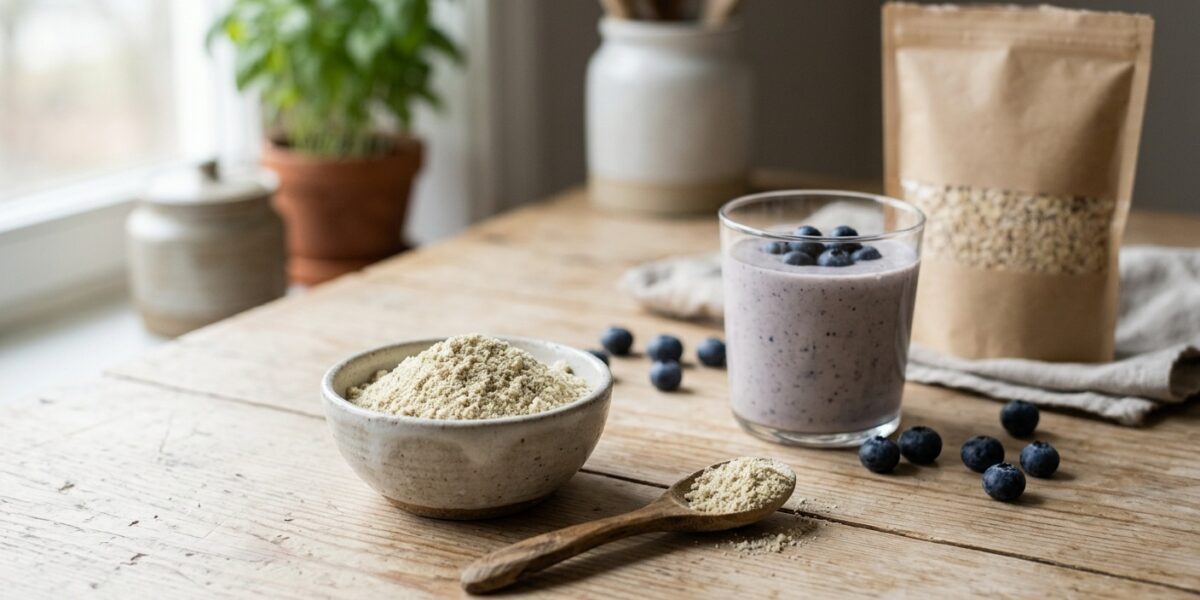
Finding a low histamine protein powder is harder than it sounds. Most tubs on the shelf are built for gym shoppers, so they come loaded with cocoa, fruit flavours, sweeteners, gums and “digestive blends” that make a histamine-sensitive gut flinch. This guide explains which protein sources people with histamine intolerance usually tolerate best, which ones tend to cause trouble, what to read on the label, and how to test a new powder without wrecking your week.
Two honest points first. No protein powder has been proven low in histamine in a clinical trial, and published food lists disagree with each other. The advice below comes from how histamine forms in food, from the way powders are made, and from what patient communities commonly report. Treat it as a way to shortlist products and test them yourself, not as a guarantee. And if you eat enough protein from fresh food, you may not need a powder at all.
Quick answer: Hemp and pumpkin seed proteins (sunflower is rated moderate on some lists) and plain unflavoured products with a very short label are the usual starting point. Flavoured, fermented, hydrolysed or “blend” powders are the usual troublemakers. Start with one product, one serving, one change at a time.
Do You Actually Need a Protein Powder?
Many people on an elimination diet end up eating the same few foods, and protein intake can slip. A powder is a convenient way to top it up, especially at breakfast or after exercise. It is not a requirement. Fresh chicken, turkey and well-cooked eggs are the standard protein foods on a low histamine plan, and our guides to the low histamine meat list and low histamine fish cover meat and the testing phase for fish in detail.
There is also a safety reason to be sceptical about powders in general. Supplements are not tested by the regulator before they are sold, and an article summarising 2025 Consumer Reports testing notes that over two thirds of the 23 protein powders and shakes tested exceeded 0.5 micrograms of lead per serving. The same article points out that crops can take up metals from soil, and advises choosing third-party tested products (USP or NSF) and considering limiting use. That is a good reason to treat powder as a backup, not the base of your diet.
How Histamine Gets Into a Protein Powder
Histamine forms when bacteria break down the amino acid histidine, so anything that is fermented, aged, or stored for a long time can carry more of it. Protein powders are not usually high in histamine themselves, but several things about how they are made and sold can matter for a sensitive person.
- Fermentation. Some pea, rice and soy proteins are fermented or “sprouted and fermented” to improve taste or digestibility. Fermented ingredients are a recognised concern on a low histamine diet. Our guide to hidden histamine in food explains where this comes from.
- Hydrolysis. Hydrolysed proteins are broken into small pieces, sometimes with enzymes or microbes. Some people report reacting to them, and the process makes it harder to know what is in the tub.
- Long storage. Powders sit in warehouses and cupboards for months. Opened tubs exposed to heat and damp are more likely to spoil or pick up mould, the same reason we ask you to be careful with nuts. See nuts and mould contamination.
- Additives. Cocoa, citrus flavours, “natural flavours”, added probiotics, digestive enzymes and sweeteners can each be a trigger for some people, whatever the protein source is.
Because histamine is heat stable, you cannot cook or blend it away. The only reliable control you have is choosing a clean product and keeping it fresh.
Protein Sources Compared
The table below sums up the main protein sources and how they usually sit on histamine intolerance lists. Lists disagree, so read the right-hand column as “where to start”, not as a verdict.
| Protein source | Usual starting position | What to watch |
|---|---|---|
| Hemp seed protein | Often named as better tolerated | Check it is plain, with no added flavours or sweeteners. Not everyone tolerates the fibre. |
| Pumpkin seed protein | Often named as better tolerated | Look for a single ingredient. Seeds can also be stored badly, so buy small tubs. |
| Sunflower seed protein | Often named as better tolerated, though some lists rate it moderate | Test it on its own before mixing with other powders. |
| Rice protein | Mixed. Some lists accept it, some do not | Choose unfermented and unflavoured, and check the heavy metal testing. |
| Pea protein | Mixed reports | Some are fermented or blended with other ingredients. Read the full label. |
| Whey isolate | Test only if you tolerate dairy | Fresh dairy is generally fine, aged and fermented dairy is not. Flavoured whey is where most problems start. See fresh dairy vs aged dairy. |
| Collagen peptides | Often tolerated by people who are sensitive to other powders, but not guaranteed | Animal-derived and hydrolysed. Choose unflavoured and single-ingredient. |
| Egg white protein | Test late | The liberator claim is weak, but powders are heavily processed. See the egg white liberator claim. |
| Bone broth protein | Usually avoided | Long cooking raises histamine. See bone broth histamine content. |
| Soy protein | Usually avoided at first | Soy is a common problem food on histamine lists, and some soy products are fermented. |
If you are new to all of this, the shortest path is to test one seed protein on its own. If it works, you have a base. If it does not, move to the next row rather than switching three variables at once.
What to Read on the Label
Most protein powder trouble is hidden in the small print, not in the protein itself. Use this checklist in the shop or on the product page.
- Count the ingredients. The best candidates have one ingredient. Two or three is fine if you recognise them. More than five is a reason to skip it for now.
- Find the flavour source. Unflavoured is easiest. Vanilla and “natural flavour” are common, and chocolate or coffee flavours bring cocoa and caffeine, which are on many liberator lists. See our guide to low histamine chocolate alternatives for what to use instead.
- Look for fermentation words. “Fermented”, “sprouted and fermented”, “cultured”, “yeast extract” and “probiotic blend” are all reasons to leave a product for the testing phase.
- Check for added enzymes and probiotics. Some powders add them for digestion. Probiotic strains vary a lot in how they affect histamine, so an unknown blend is an extra variable you do not need.
- Check sweeteners and gums. Sugar alcohols and some sweeteners cause digestive upset that is easy to mistake for a histamine reaction. Our histamine food diary helps you sort one from the other.
- Look for added vitamins. Some shakes and powders add B vitamins. Healthdirect, Australia’s national health service information site, notes that vitamin B6 is added to many sports drinks, protein shakes and weight loss shakes, so it is worth adding up where your B6 comes from if you also take supplements.
- Look for independent testing. Certification by an independent organisation such as USP or NSF International means someone other than the brand has checked purity and label accuracy, which is the point Consumer Reports makes in its advice.
- Note the date and storage advice. Buy a size you will finish within a few weeks of opening, and keep it cool and dry.
Examples of Products to Look At
We have not lab-tested these products, and no brand can promise a powder is safe for every histamine-sensitive person. The examples below are widely sold single-ingredient or short-label products of the types discussed above. Check the current label before buying, because formulations change.
Hemp Seed Protein
Hemp seed protein is made from pressed hemp seeds and usually has a short ingredient list. It has an earthy taste and a slightly gritty texture, which works best in smoothies or porridge. Brands such as Manitoba Harvest and Nutiva sell unflavoured versions.
Our top pick
A single-ingredient seed protein often used as a starting point on histamine intolerance lists. Check the current label and independent testing.
Check price on Amazon →Pumpkin Seed Protein
Pumpkin seed protein has a mild, nutty taste and blends well into smoothies and baking. Brands such as Sprout Living sell simple unflavoured versions. As with any seed product, buy a small tub and store it somewhere cool and dry.
Our top pick
A mild-tasting single-ingredient seed protein. Check the current label, the date and any independent testing.
Check price on iHerb →Collagen Peptides
Collagen peptides dissolve easily and have almost no taste, which makes them easy to hide in warm drinks. Some people who cannot tolerate other powders do well with them, although this is a patient-reported pattern rather than something proven. Choose unflavoured, single-ingredient products and note that collagen is a poorer protein source than the others in the table because it lacks some essential amino acids.
Our top pick
An easy-mixing animal-derived option that some sensitive people tolerate. Choose single-ingredient, unflavoured products.
Check price on Amazon →How we chose these types. We looked for sources with short ingredient lists that are not routinely fermented, and left out products that are usually flavoured, fermented or blended with enzymes and probiotics. That is a way to shortlist, not a ranking. No head-to-head testing of brands exists for histamine intolerance.
How to Test a New Protein Powder Safely
A powder is a concentrated dose of something new, so it deserves a proper trial. A slow approach also protects you from blaming the wrong product.
- Wait until you are stable. Do not add a new powder in the middle of a flare or on the same week you are reintroducing another food.
- Change one thing. Add one powder, nothing else new, and keep the rest of your food as steady as you can.
- Keep it simple. Follow the serving size on the label, and ask a dietitian or pharmacist if you are unsure how much to use. Mix it into something you already tolerate, such as plain oat porridge.
- Write it down. Note the time, the amount, and any symptoms over the next few hours and the next day. Reactions to a powder can be delayed.
- Keep everything else steady. If nothing happens, keep the rest of your meals the same for a few more days so you can tell the powder apart from other changes.
- Repeat before you decide. One good day does not prove a product is safe, and one bad day does not prove it is not. If you are unsure, take a few days off and try again.
If a powder causes digestive upset but no flushing, hives or headaches, the cause may be fibre, sweeteners or gums rather than histamine. That is still a good reason to stop, but the fix is different. Our low histamine elimination diet plan explains how to structure testing so that results are readable.
Easy Ways to Use It Without Adding Triggers
The best powder is the one you will actually use, and it needs to go into food that is already safe for you. These ideas keep the rest of the meal simple.
- Plain porridge. Stir a seed protein into cooked oats made with water or fresh milk, then top with blueberries or a chopped pear.
- A very simple smoothie. Blend a seed protein with a ripe (not overripe) banana, blueberries and water or a plant milk you tolerate. Our low histamine smoothie recipes have more ideas.
- Baking. Replace a small part of the flour in pancakes or muffins with a seed protein. It changes texture, so start with a small swap.
- Warm drinks. Collagen dissolves into warm water or milk without flavour.
- Breakfast on the move. Pre-mix dry portions into a jar and add water or milk when you need it. See our low histamine breakfast ideas and low histamine snacks on the go.
Avoid ready-to-drink protein shakes and bars as a first step. They add flavours, stabilisers and long shelf life, which is the opposite of what a sensitive gut usually wants.
Common Mistakes With Protein Powders
- Starting with a flavoured product. A vanilla or chocolate powder adds several variables at once. Start unflavoured, then add flavour yourself with fruit.
- Choosing a “gut health” blend. Added probiotics, prebiotics and enzymes may sound helpful, but each one is something else to test.
- Using powder to replace meals. Powders are not complete foods. If you are eating very little, speak to a doctor or dietitian rather than leaning on shakes.
- Buying a huge tub. A big tub of a product you have not tested wastes money, and a half-used tub stored badly is a problem of its own.
- Ignoring symptoms that are not classic histamine reactions. Bloating, loose stools and nausea after a powder can come from fibre or sweeteners. That still matters.
- Stacking supplements. If you take other supplements, keep track of what contains vitamins such as B6 in total. If you are unsure about a combination, ask a pharmacist.
When a Protein Powder Is Not a Good Idea
Powders are optional. Some situations call for caution or a conversation with a professional first.
- During a flare. Wait until symptoms have settled before testing anything new.
- If you have kidney disease or another condition affecting protein intake. Protein needs can differ widely, so ask your doctor or dietitian.
- If you have a food allergy. Hemp, seeds, dairy, egg and soy products are all allergens for some people. A food allergy is not the same as histamine intolerance and needs proper assessment.
- If the powder is for a child. Check with a paediatrician or dietitian before using any supplement.
- If you are pregnant or breastfeeding. Contamination concerns matter more here, so ask your doctor first.
When to See a Doctor
Histamine intolerance symptoms overlap with food allergy, coeliac disease, inflammatory bowel disease, mast cell disorders and other conditions. See a doctor before relying on supplements or shakes to fill a gap in your diet, especially if you are losing weight without trying, if symptoms are getting worse, or if you are managing a medical condition.
Call emergency services straight away if you or someone else has signs of anaphylaxis after eating or taking a supplement. These include swelling of the lips, tongue or throat, difficulty breathing or wheezing, a hoarse voice, feeling faint or dizzy, or collapse. Anaphylaxis is a medical emergency. Use an adrenaline auto-injector if one has been prescribed, and remember that adrenaline (epinephrine) is the first treatment and antihistamines are not a substitute.
Do not stop or change any prescribed medication because of a diet or supplement choice. If you take medicines or other supplements, ask a doctor or pharmacist before adding a new powder.
Questions People Ask About Protein Powder and Histamine
What is the best low histamine protein powder?
There is no single best product, because tolerance differs and no powder has been proven low in histamine. Single-ingredient, unflavoured seed proteins such as hemp and pumpkin seed are the most common starting point, and sunflower is rated moderate on some lists. Test one at a time and keep notes.
Is whey protein low in histamine?
It depends on the product and on how you handle dairy. Fresh dairy is generally better tolerated than aged or fermented dairy, but whey powders are processed and often flavoured. If you want to test one, choose an unflavoured isolate and try it on its own.
Is pea protein okay for histamine intolerance?
Reports are mixed. Some pea proteins are fermented or blended with other ingredients, so read the whole label. If you want to try one, choose unflavoured, unfermented and single-ingredient, and treat it as a test food.
Is collagen low in histamine?
Some people with histamine intolerance tolerate unflavoured collagen peptides well, but there is no research proving it is low in histamine. Choose a single-ingredient product and introduce it slowly. It is also lower in some essential amino acids than other protein sources.
Why do some protein powders trigger my symptoms?
The trigger is often not the protein. Flavours, cocoa, sweeteners, gums, added probiotics and fermented ingredients are more likely causes. Fibre and sugar alcohols can also cause digestive upset that looks like a histamine reaction.
Are protein powders safe to use every day?
Supplements are not tested by the regulator before sale, and some have been found to contain heavy metals, so it is sensible to choose independently tested products and not to rely on powder for most of your protein. If you plan to use one daily, discuss it with your doctor or dietitian.
Medical disclaimer: This content is for informational purposes only and does not constitute medical advice. Always consult a qualified healthcare provider before starting any supplement regimen.
→ Find your personal dose with the DAO Supplement Dose Calculator — personalised dosing based on your symptoms and lifestyle.
→ Build your personalised protocol with the Supplement Stack Builder — select your symptoms, get specific doses and timing.